


In This Post
What is a prop used for in construction?
Why is steel prop called an Acrow prop?
Can acrow props be used permanently?
How do you use a steel prop?
What components typically make up steel props?
What are the benefits of steel propping?
What types of scaffolding prop are included?
What is the most common type of scaffolding steel prop?
What is the use of adjustable steel prop?
01.What is a prop used for in construction?
Propping scaffolding is an essential part of any construction project. It refers to the use of temporary supports or props to secure structures during renovation, maintenance, or construction work.In construction, the term "prop" usually refers to a temporary support or support device used to secure something or provide support during construction, renovation, or maintenance work. Props are commonly used in various architectural scenarios, such as:
|
|
|


prop in
construction
Formwork Support
Temporary Shoring
Adjustable
02.Why is steel prop called an Acrow prop?
The term "Arrow Prop"
The term "Arrow prop" refers to an adjustable steel prop commonly used in buildings. The name Arrow prop comes from Arrow Engineers Limited, which was established in the early 20th century in the UK. The company has introduced and promoted this special type of adjustable steel prop, which is widely used in the construction industry.
Arrow Engineers Limited has pioneered the design and development of adjustable steel props, which have significant advantages over traditional props. Its products have gained widespread recognition and recognition in the construction industry. Over time, the brand name "Arrow prop" has become synonymous with adjustable steel props
Due to the widespread use and recognition of the term "Arrow prop", construction professionals and workers often colloquially use it to refer to any adjustable steel prop, without considering the manufacturer. This usage further strengthens the connection between the term and the product itself.It should be noted that although "Arrow props" is a commonly used term, many manufacturers produce similar adjustable steel props under different brands.

03.Can acrow props be used permanently?
The Arrow props are mainly designed for temporary use in construction, renovation, and maintenance projects. Although the Arrow props are durable and able to withstand heavy loads, they are usually not designed and are recommended for permanent installation. There are four main considerations:
Arrow props are usually made of steel, and over time, the steel is easily corroded, especially in harsh environments or exposed to humid environments.
The Arrow prop is designed and tested for temporary use under specific load conditions. Permanent use of them may exceed their expected design parameters, leading to potential safety risks or structural failures over time.
Arrow columns do not meet the requirements of permanent structural components, and the use of these columns in such applications may lead to violations of regulations.
In the long run, compared to installing appropriate permanent structural solutions, using the Arrow column as permanent support does not result in sustained maintenance costs that are not as cost-effective.
In summary, for permanent structural support requirements, appropriate building materials and methods that comply with building codes and regulations and provide long-term safety and durability must be used.
04.How do you use a steel prop?
To use steel props, the following steps are required to ensure safe and effective support for construction, renovation, or maintenance activities
prepare
Check the steel props for any signs of damage, wear, or defects. Ensure that all components are in good condition and working properly, such as screws, adjustment mechanisms, base plates, and locking pins.
location
Place the bottom plate of the steel props on a stable and horizontal surface. Ensure that the surface can support the weight of the pillar and the load it will bear.
Height adjustment
Adjust the height of the steel props to the desired level using the telescopic part. Ensure smooth and controllable adjustment to avoid sudden movements that may cause instability.
Locking mechanism
Once the steel props reaches the required height, use a locking mechanism to secure it in place. Ensure that the locking mechanism is securely engaged to maintain stability and support.
Load distribution
Ensure that the load is evenly distributed and concentrated on the supporting surface of the pillars. Avoid overloading the props or placing uneven loads that may affect their stability.
Monitoring and adjustment
Regularly monitor the stability and alignment of steel props during use, especially when there are changes in load or environmental conditions.
Move
When steel props are no longer needed, use an adjustment mechanism to lower the support to the minimum height, ensuring that it is fully retracted.
Storage
Store the steel props in a dry and clean environment, away from moisture and corrosive substances. This helps to extend the lifespan of the prop and ensure its readiness for future use
05.What components typically make up steel props?
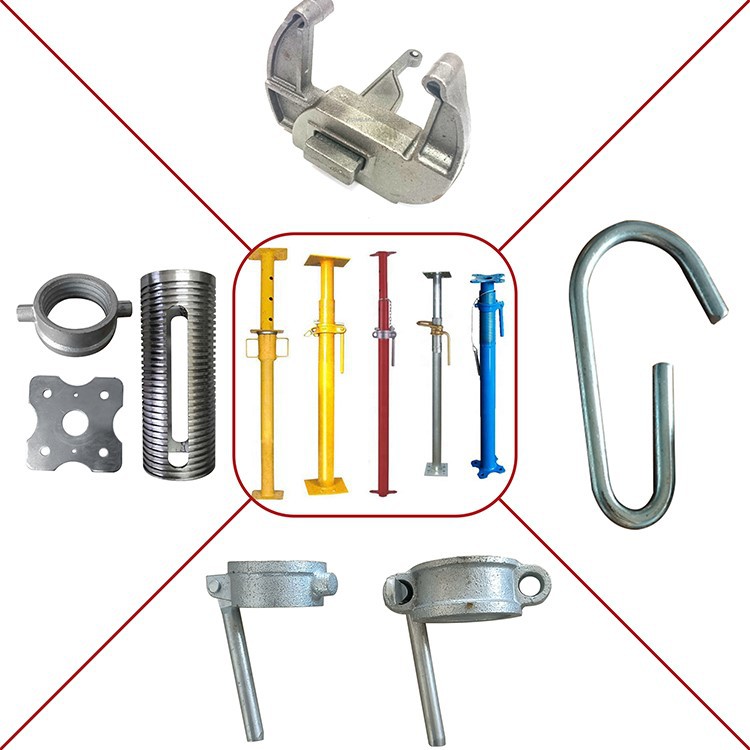
Outer Tube: The outer tube is the main structural component of the steel prop. It provides the primary support and stability to the prop.
Inner Tube: Inside the outer tube, there is an inner tube that can slide up and down to adjust the height of the prop.It provides the telescopic mechanism that allows the prop's height to be adjusted.
Adjusting Mechanism: The inner tube is connected to a threaded adjusting mechanism, typically located at the top of the prop.
Base Plate: The bottom end of the prop usually features a base plate that provides stability and distributes the load over a larger area.
Locking Pins or Clips: Some steel props may feature locking pins or clips to secure the inner and outer tubes in place once the desired height adjustment has been made.
End Plates: In addition to the base plate, steel props may also feature end plates at the top and bottom ends.
06.What are the benefits of steel propping?
Steel supports provide the following benefits in building and structural support applications
Strength and durability
Steel props are made of high-strength steel, providing reliable support and stability for workers and structures during construction activities. Has excellent carrying capacity. Poor environmental conditions, suitable for various
Usage
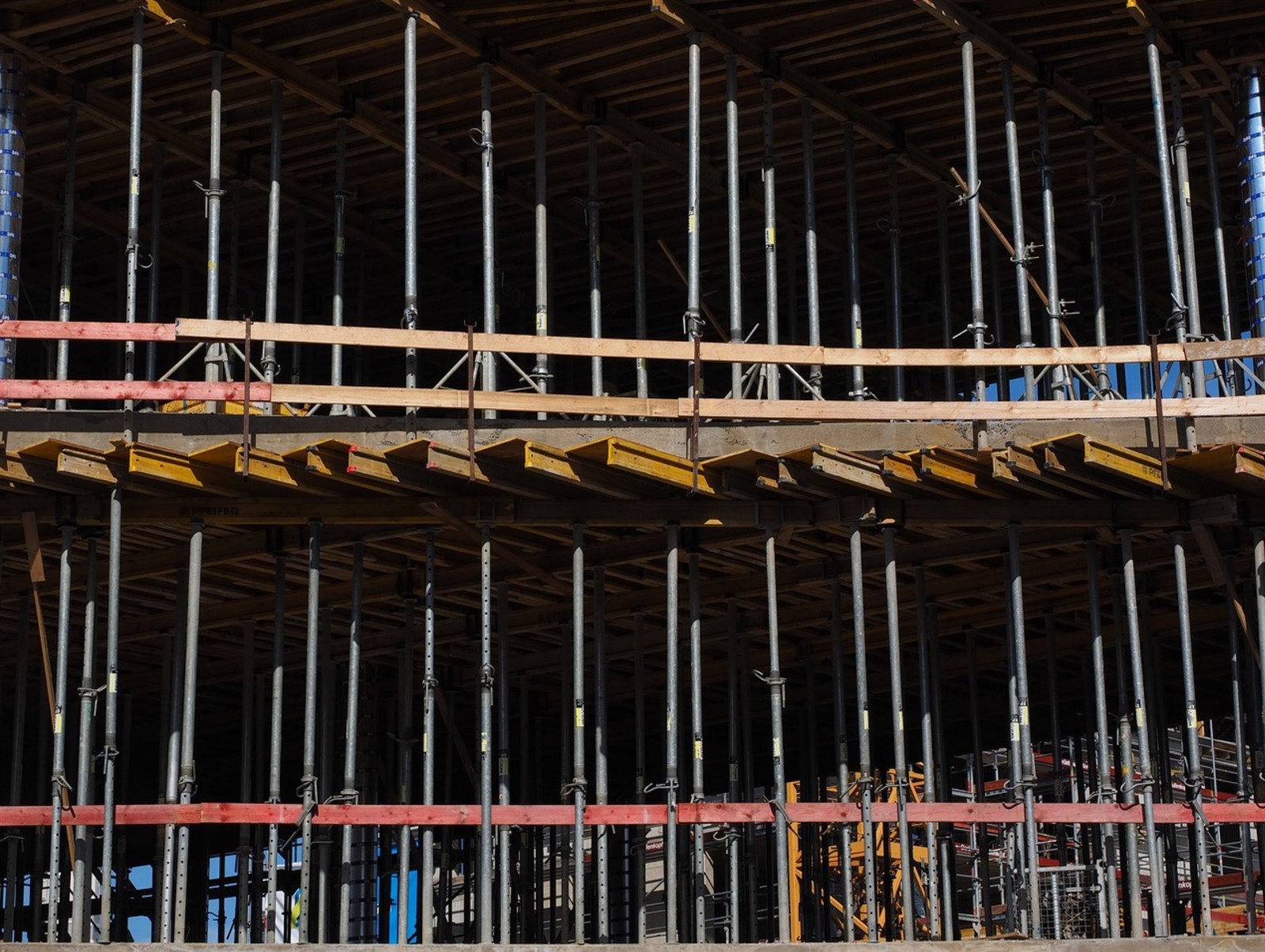
Steel props have a wide range of uses and can be used in various building applications, including supporting formwork during concrete pouring, supporting existing structures, providing temporary support for beams and floors, and creating temporary scaffolding platforms
Adjustable
The height of steel props is usually adjustable and can be accurately positioned and customized to meet various construction requirements. This adjustability allows for flexibility in supporting structures of different heights and shapes, without the need for on-site customization or cutting.
Reusable
The installation, adjustment, and disassembly of steel props are fast and convenient. Their reusability allows for multiple applications, reduces the need for frequent replacement, and minimizes waste to the greatest extent possible.
07.What types of scaffolding prop are included?

These props consist of inner tubes, outer tubes, and threaded adjustment devices, allowing for easy height adjustment. They have a wide range of uses and can be used for various applications.

These props are similar to adjustable steel props, but have different adjustment mechanisms. They use a push-pull height adjustment, which is more convenient in some cases.

On the contrary, light weight props are designed for lighter loads or for use in lower demand applications. Compared to heavy props, they are usually lighter and easier to handle.

Heavy props are designed to support heavier loads or for higher demand building applications. They are usually made of thicker steel and have higher load-bearing capacity.
08.What is the most common type of scaffolding steel prop?

The most common type of scaffolding steel prop is adjustable steel prop. Adjustable steel props are widely used in buildings due to their versatility, ease of use, and ability to support various loads. They are composed of inner tubes, outer tubes, and thread adjustment mechanisms, which can easily adjust the height to meet different structural requirements.
Adjustable steel props are popular because they can be quickly set and adjusted to the desired height, providing stable support for formwork, scaffolding, and other building applications. Although other types of steel props, such as push-pull or telescopic props, have their specific applications and advantages, adjustable steel props, due to their versatility and wide availability in the construction industry, especially in construction, renovation, or maintenance projects.
09.What is the use of adjustable steel prop?
Adjustable steel props are universal tools used for various purposes in buildings.
Temporary support
Adjustable steel props are usually used to support templates, beams, slabs, and other temporary structures during construction.
Formwork Support
During the concrete pouring process of floors, floors, or beams, adjustable steel props are used to support the template.
Shoring
In renovation or maintenance projects where existing structures require support, adjustable steel columns can be used as temporary supports.
Scaffold support
Adjustable steel props are also used as part of the scaffolding system to provide vertical support for scaffolding platforms of different heights.
Create temporary work platform
Adjustable steel props can be used to create temporary work platforms or scaffolding systems for workers to safely enter elevated areas.
Stable wall
In renovation projects or when working on existing structures, adjustable steel props are used to stabilize walls or wall segments that may be weakened or damaged.


