


Ringlock Scaffolding

Product Name:Ringlock Scaffolding
Standard:AS/NZS1576.3:2015
Surface treatment:Hot dipped galvanized
Material :Q235 Steel,Q355 Steel
Dimensions:Ringlock Standard:Φ48.3*3.25mm and Φ60*3.25mm
Ringlock ledger :Φ48.3*2.75 mm or customized
Ringlock diagonal brace :Φ48.3*2.75 mm or customized
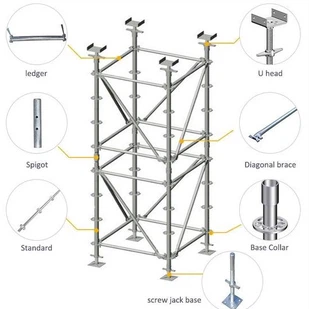
Ringlock accessories:Ringlock rosette,Ringlock ledger head,Ringlock pins,Twin Wedge Coupler,Spigot,Base Jack,Base Jack
Description:The ringlock scaffolding is erected by prefabricated components of ringlock verticals, ringlock horizontals, ringlock diagonal, and horizontal braces, made by high-strength steel structures. Mainly locks each member tightly through specially designed ring-lock rosette to provide stable structural support.

Ringlock Scaffolding Systems
The ringlock scaffolding system can flexibly adjust the height, shape, and layout of the scaffolding according to different construction requirements and site conditions.
ringlock components
The ringlock system scaffold is erected by prefabricated components of ringlock verticals, ringlock horizontals, ringlock diagonal, and horizontal braces, made by high-strength steel structures.
Ringlock Scaffolding Standard
 |
 |
 |
|
|
Material |
Q355 Steel |
||
|
Surface treatment |
Hot dipped galvanized |
||
|
Dimensions |
Φ60*3.25mm、Φ48.3*3.25mm |
||
|
Effective length |
500/ 1000/ 1500/ 2000/ 2500/ 3000 mm |
||
Ringlock standard/ vertical with spigot
 |
 |
 |
|
Item No. |
Effective Length |
Theoretic Weight |
 |
|
YFRS48 050 |
0.5 m / 1’7” |
3.2 kg / 7.04 Ibs |
|
|
YFRS48 100 |
1.0 m / 3’ 3” |
5.5 kg / 12.1 lbs |
|
|
YFRS48 150 |
1.5 m / 4’11” |
7.8 kg / 17.16 lbs |
|
|
YFRS48 200 |
2.0 m / 6' 6" |
10.1 kg / 22.22 lbs |
|
|
YFRS48 250 |
2.5 m / 8' 2” |
12.4 kg / 27.28 lbs |
|
|
YFRS48 300 |
3.0 m / 9' 9” |
14.6 kg /32.12lbs |
Ringlock Scaffolding Ledger
Material :Q235 Steel
Surface treatment:Hot dipped galvanized
Dimensions: Φ48.3*2.75 mm or customized by customer
 |
 |
|

Ringlock ledger sizes for European market
|
Item No. |
Effective Length |
Theoretic Weight |
 |
|
YFRL48 039 |
0.39 m / 1' 3" |
1.9 kg / 4.18 lbs |
|
|
YFRL48 050 |
0.50 m / 1' 7" |
2.2 kg / 4.84 lbs |
|
|
YFRL48 073 |
0.732 m / 2' 5" |
2.9 kg / 6.38 lbs |
|
|
YFRL48 109 |
1.088 m / 3' 7" |
4.0 kg / 8.8 lbs |
|
|
YFRL48 129 |
1.286 m / 4' 3" |
4.6 kg / 10.12 lbs |
|
|
YFRL48 140 |
1.40 m /4' 7" |
5.0 kg / 11.00 lbs |
|
|
YFRL48 157 |
1.572 m / 5' 2" |
5.5 kg / 12.10 lbs |
|
|
YFRL48 207 |
2.072 m / 6' 9" |
7.0 kg / 15.40 lbs |
|
|
YFRL48 257 |
2.572 m / 8' 5" |
8.5 kg / 18.70 lbs |
|
|
YFRL48 307 |
3.07 m / 10' 1" |
10.1 kg / 22.22 lbs |
Ringlock ledger sizes for South East Asia and Africa market
|
Item No. |
Effective Length |
 |
|
YFRL48 060 |
0.6 m / 1' 11" |
|
|
YFRL48 090 |
0.9 m / 2' 11" |
|
|
YFRL48 120 |
1.2 m / 3' 11" |
|
|
YFRL48 150 |
1.5 m / 4' 11" |
|
|
YFRL48 180 |
1.8 m / 5' 11" |
|
|
YFRL48 210 |
2.1 m / 6' 6" |
|
|
YFRL48 240 |
2.4 m / 7' 10" |
Ringlock ledger sizes for Singapore market
|
Item No. |
Effective Length |
 |
|
YFRL48 061 |
0.61 m / 2' |
|
|
YFRL48 091 |
0.914 m / 3' |
|
|
YFRL48 121 |
1.219 m / 4' |
|
|
YFRL48 152 |
1.524 m / 5' |
|
|
YFRL48 182 |
1.829 m / 6' |
|
|
YFRL48 213 |
2.134 m / 7' |
|
|
YFRL48 243 |
2.438 m / 8' |
|
|
YFRL48 304 |
3.048 m / 10' |
Ringlock Ledgers Include U-type ledgers and O-type ledgers
| Ringlock Ledger O-type | Ringlock Ledgers U-type | |
| Structural Shape | It has a closed circular shape | Shaped like a 'U' with openings at both ends. |
| Connection Method | Usually it is directly attached to the upright pole, with a relatively tight connection. | Connecting to poles or other components through openings may require specific fasteners or locks for fixation. |
| Stability | Due to its closed ring shape, it has a larger contact area with the upright pole and may have better stability to some extent. | In some cases, there may be a certain risk of shaking due to the connection method at the opening. |
| Installation and Disassembly | During installation, it is necessary to insert the upright pole, which may be relatively laborious to disassemble. | During installation and disassembly, the presence of openings may make the operation relatively simple. |
Ringlock Scaffolding Diagonal
 |
 |
 |
Ringlock diagonal brace / Bay braces
Material : Q195 Steel / Surface treatment:Hot dipped galvanized
Dimensions: Φ48.3*2.75 or customized by customer
|
Item No. |
Bay length |
Bay width |
Theoretic Weight |
 |
|
YFDB48 060 |
0.6 m |
1.5 m |
3.92 kg |
|
|
YFDB48 090 |
0.9 m |
1.5 m |
4.1 kg |
|
|
YFDB48 120 |
1.2 m |
1.5 m |
4.4 kg |
|
|
YFDB48 065 |
0.65 m / 2' 2" |
2.07 m |
7.35 kg / 16.2 lbs |
|
|
YFDB48 088 |
0.88 m / 2' 10" |
2.15 m |
7.99 kg / 17.58 lbs |
|
|
YFDB48 115 |
1.15 m / 3' 10" |
2.26 m |
8.53 kg / 18.79 lbs |
|
|
YFDB48 157 |
1.57 m / 8' 2" |
2.48 m |
9.25 kg /20.35 lbs |
 |
 |
 |
Ringlock Scaffolding Accessories
Base collar
Surface treatment : Hot dipped galvanized
|
Item No. |
Dimension |
Length |
 |
|
YFBC48 024 |
Q235,φ48.3*3mm |
0.24 m / 9.4 ” |
|
|
YFBC48 030 |
Q235,φ48.3*3mm |
0.30 m / 11.8 ” |
|
|
YFBC48 028 |
Q345,φ57*3.5 mm |
0.28 m / 11 ” |
|
|
YFBC48 037 |
Q345,φ70*3.5mm |
0.37 m / 14.57 ” |
 Ringlock Rosette

Ringlock Ledger Head
 Spigot
 Twin Wedge Coupler

Base Jack


Ringlock Pins

Ringlock Brace End
How to Ringlock Scaffolding Packed
For longer members such as ringlock standard, use steel pallets,steel wires, ropes, or specialized strapping.
For easily damaged ring scaffolding accessories, such as ringlock rosette, cardboard or wooden boxes can be used for packaging to prevent collision and wear.
For larger circular scaffolding components, such as scaffold planks, protective layers such as plastic film or bubble pads can be applied to the surface to reduce scratches.
 |
 |
 |
 |
 |
Ringlock scaffolding is a type of modular scaffolding with locking ring connectors. It is one of the most efficient scaffolds widely used in industrial and heavy construction. The ringlock system scaffold is erected by prefabricated components of ringlock verticals, ringlock horizontals, ringlock diagonal, and horizontal braces, made by high-strength steel structures.
Ringlock Scaffolding Related Products




 |
 |
 |
|
Application of Ringlock Scaffolding
In construction, ringlock scaffolding is used for the construction of high-rise buildings' exterior walls, internal structures, staircase handrails, and other parts; For example, tiling and painting the exterior walls of high-rise buildings
In bridge construction, ringlock scaffolding serves the construction and equipment installation of bridge piers and decks;
Industrial plant construction, ringlock scaffolding assists workers in frame construction and installation of large equipment;
During the construction of sports venues, ringlock scaffolding facilitates the installation and welding of the main structure of the venue, as well as the construction and decoration of the audience seats
In municipal engineering, digging underground passages can be used, and installing street lights and billboards also requires the use of ringlock scaffolding
During stage construction, ringlock scaffolding is used for setting up stages such as concerts and plays
During ship repair, ringlock scaffolding serves for the repair and painting of the outer hull panels;
In the petrochemical industry, it is also necessary to stand on ringlock scaffolding to work on large oil tank construction and pipeline installation
Why Choose Youfa Group
Tianjin Youfa Steel Pipe Group Co., Ltd. was established on July 1, 2000, Youfa is a large scale steel products manufacturing enterprise. In December 2020, Youfa Group successfully landed on the main board of Shanghai Stock Exchange .We mainly manufacture ERW steel pipe, galvanized steel pipe, hollow section steel pipes, SSAW steel pipe, plastic lining composite pipe, plastic coated steel pipe, stainless steel pipe and pipe fitting, and scaffolding, etc.
Besides headquartering in Tianjin, currently we have 13 subsidiariesand branches in Tangshan, Handan, Shaanxi and Liyang. Currently, there are totally about 9000 employees and 293 production lines in 13 factories, 3 national accredited laboratory, and 1 Tianjin government accreditedbusiness technology center.
Tangshan Youfa New Building Equipment Co., Ltd., as one of the subsidiaries of YOUFA Group, mainly produces scaffolding products. The product range includes scaffolding pipe, ring-lock scaffolding system, frame system, coupler system scaffolding, cup-lock scaffolding system, steel props and the accessories like screw base jack and u head jack.All scaffolding pipes are tested compliant to standards of BS1139, EN39, GB/T 3091 & GB/T13793, etc.
Benefits of Ringlock Scaffolding
The ringlock scaffold offers you a high degree of flexibility and versatility
With a ringlock modular scaffold, you can not only set several angles at the same time with just one connection point, but it is also particularly sustainable for you. For example, with scaffolding material you can not only build complex scaffolding, but also roofs with spans of up to 40 metres, shoring or construction site protection. So the investment pays off several times over.
Reduced working time and errors during scaffold assembly
One of the core advantages of the ringlock scaffolding type is the fast erection and dismantling times. Ledgers and diagonals can be fixed to the rosette connector with just a few hammer blows. This not only saves time, but also manpower. And this applies not only to scaffold assembly and dismantling but also to maintenance tasks such as cleaning the material. This is particularly easy and quick thanks to the flat shape of the rosette connector. At the same time, a ringlock modular scaffold is less error-prone than the traditional tube and clamp scaffold, for instance, because of the prefabricated connection points. So you get a safe scaffold with less effort.
You can not only assemble and dismantle a ringlock scaffold quickly, but also store it in a space-saving way
The ringlock connection not only allows you to erect and dismantle your scaffolding in record time, but you also do not have to worry much about how to store and transport the scaffolding material. In this respect, you benefit from the fact that a ringlock scaffold like consists of only a few individual parts. They are also designed in such a way that they are particularly easy to stack. The typical notches on the outer edge of the rosette also ensure that the uprights cannot roll away easily.
A ringlock scaffold is designed to bear high loads
Even if things get a bit rough on the construction site, you don't have to worry about your scaffolding. Not only is the scaffolding material hot-dip galvanised and therefore particularly durable and resistant to environmental impact, but the load bearing capacity is also particularly high. A scaffold can bear up to 6 kN per m2. This doesn't mean much to anyone who hasn't just completed a degree in physics. In practice, this means that you can store large amounts of heavy material such as prefab concrete materials on your scaffolding. Because of this high load-bearing capacity, is also used as a shoring solution.
Mixing approvals for even more flexibility
The ringlock connection method is justifiably popular among scaffolders. That is why there are several manufacturers for this type of scaffolding on the market. If you want to work particularly economically while remaining flexible, you should make sure that the ringlock scaffolding you want to invest in is officially approved for mixing with scaffolding material from different manufacturers. For example, you can mix material with three other systems without hesitation, as it is officially approved. You can use up to two scaffolding systems at the same time in combination with material without requiring a structural analysis. You can read more about the advantages of modular scaffolding with mixing approval in our blog article on this topic.
How Do You Ensure Proper Inspection of Ringlock Scaffolding Before Use?
Who should inspect scaffolding?
According to OSHA, ringlock scaffolding should be inspected by a competent person before each work shift and after any occurrence that could affect its structural integrity, such as severe weather, impact, or alteration. A competent person is someone who has the training, knowledge, and authority to identify and correct hazards related to scaffolding. This person should also be familiar with the scaffolding specifications, load capacities, and erection and dismantling procedures. If you are not a competent person, you should not inspect scaffolding or use it until it has been inspected and approved by one.
What should you look for when inspecting scaffolding?
When inspecting ringlock scaffolding, there are many aspects and components to consider, based on the type, design, and configuration. Generally, you should check that the base and foundation are level, stable, and supported by footings or sills; the scaffold is erected and braced according to instructions; it is at least 10 feet away from power lines; it has guardrails, midrails, and toeboards on all open sides and ends; it has a safe access ladder, stairway, or ramp; the decking is complete with no gaps or protrusions; there are no damaged, defective, or missing parts; there are no excessive loads or debris; and it has clear tags or labels indicating its status.
How should you document and communicate your inspection results?
After inspecting ringlock scaffolding, you should document your findings and actions in a written report or log, as well as on the scaffold tags or labels. You should include the date, time, location, type, and condition of the scaffold, as well as the name and signature of the competent person who performed the inspection. You should also note any hazards, defects, or violations that you identified and corrected or reported. You should keep the inspection records for at least one year or until the scaffold is dismantled.
You should also communicate your inspection results to the workers who use the scaffold, as well as to the supervisor or manager of the project. You should inform them of the scaffold's status, any restrictions or limitations, and any precautions or instructions that they need to follow. You should also update them of any changes or incidents that affect the scaffold's safety or performance.
What are the benefits of inspecting scaffolding before use?
Inspecting ringlock scaffolding before use is not only a legal requirement, but also a good practice that can bring many benefits to your work site. This includes preventing accidents and injuries, protecting workers' health and safety, avoiding fines or penalties, saving time and money, and improving the quality and efficiency of your work. By inspecting scaffolding, you can detect and fix problems before they worsen or cause damage, ensuring that the scaffold is suitable and functional for your needs.
What are some best practices for inspecting scaffolding before use?
To ensure that you inspect ringlock scaffolding before use effectively and consistently, you should plan and schedule your inspections ahead of time. Utilize a checklist or a form that covers all the relevant items and criteria for your scaffold type and configuration. Have the necessary tools and equipment for your inspection, such as a tape measure, level, hammer, wrench, flashlight, and camera. It's beneficial to work in pairs or teams to inspect different parts or sections of the scaffold simultaneously or sequentially. Additionally, report and correct any hazards or defects immediately or as soon as possible. Lastly, review and update your inspection records and tags regularly and accurately.

How to Solve Faulty or Damaged Ringlock Scaffolding?
After finding faulty or damaged parts of your ringlock scaffolding, you may be wondering what you can do next. If there is extensive damage, these parts will need to be replaced, or it may be time to buy a new ringlock scaffolding set. Otherwise, you can also do the following:
Downgrade — You can repurpose the part for other use if the fault or damage does not affect the whole part. For example, a deformed or warped metal plank can be cut and remade into a soleplate.
Scrapping — If downgrading is not possible, you can also have the parts scrapped.
Repair — Some faults can be repaired, which reduces the need for replacement purchases. For example, welding, re-binding, and other methods can be used to reform the faulty part and make them fit for use again.
Reduction in Length — Parts can also be cut and shaped again. For example, a faulty tube can be cut to eliminate the damaged ends.
One Ringlock Scaffolding for All Your Needs
Ring-lock scaffolding systems offer unmatched versatility for your worksite needs.
Adjustable and Reconfigurable
The interlocking components of ring-lock scaffolding can be easily assembled and adjusted to fit the specifications of any job. Once erected, can also be quickly reconfigured by moving or adding horizontal braces and platforms to adapt to changes in the work area or task requirements. This flexibility allows a single ring-lock system to serve many purposes, reducing the need to invest in scaffolding for specific and limited uses.
For All Heights and Loads
Ring-lock scaffolding accommodates a wide range of heights, from single level platforms up to structures over 200 feet high. The circular ring-lock connectors are also rated to hold significant loads, up to over 7,000 pounds per connector. This means ring-lock systems can support the heavy-duty needs of most construction and industrial work. The strong, secure connections between components give a high strength-to-weight ratio, resulting in systems that are both lightweight and sturdy.
Safe and Compliant
The simplicity of ring-lock connections also contributes to their safety. The interlocking rings are easy to assemble and dismantle, minimizing the risk of incorrect installation. Ring-lock scaffolding meets or exceeds safety standards set by OSHA and ANSI when properly erected. The open frame design provides unobstructed access and visibility, while integrated features like toe boards, handrails, and non-slip decking enhance user protection.


Ringlock Scaffolding Is Very Flexible and Stable
Construction engineers looking for a system that can be optimised for any facade geometry quickly and safely can rely on the ringlocks. You can make locks at different angles and align 45 degrees or 90-degree angles accurately using the notch.
The ringlock scaffolding includes:
Vertical posts (standards).
Horizontal members (ledgers).
Ringlock braces.
Board brackets.
Truss ledgers.
Planks.
The ringlock system can be used alongside accessories like hop up brackets, transoms, infill panels, couplers, beam clamps etc.
Safety: Ringlock Scaffolding Prevents Accidents
These ringlock scaffolding are engineered for maximum safety. Their interlocking components prevent unstable or uneven platforms, reducing the risk of accidents.
Fall Protection
Scaffolding Ring-lock incorporates integral guardrails and toe boards that provide fall protection on all working platforms and access points. This helps prevent injuries from falls, which are a leading cause of death in the construction industry.
Secure Work Area
The ring-lock system's modular frames lock together, creating an extremely sturdy scaffolding structure. There are no loose components, bolts or clips that could become dislodged or fall, injuring workers below. The secure connections also withstand environmental stresses from wind, weather and heavy use.
Standardized and Certified
Ring-lock scaffold is manufactured according to strict safety standards to ensure maximum reliability and durability. Components are interchangeable, simplifying assembly and disassembly. Ring-lock systems also often meet or exceed safety certifications from organizations like OSHA, helping companies meet compliance requirements.
Easier Assembly
The ring-lock system's simple pin-lock connections make assembly and disassembly more efficient. Workers do not waste time searching for and attaching multiple loose parts. The interlocking frames and platforms go together quickly, saving costs. Fewer loose pieces also mean fewer opportunities for critical components to go missing, which could compromise the stability and safety of the structure.
A Few Essential Ringlock Scaffolding Safety Tips
Use fall protection
Make sure that guardrails are in place and secure. Workers should also wear personal protective equipment, including hard hats, harnesses and lanyards when working at heights. OSHA requires workers to wear a full-body harness when working on a suspended scaffold more than 10 feet above the working surface.
Follow load capacity guidelines
Make sure that guardrails are in place and secure. Workers should also wear personal protective equipment, including hard hats, harnesses and lanyards when working at heights. OSHA requires workers to wear a full-body harness when working on a suspended scaffold more than 10 feet above the working surface.
Follow load capacity guidelines
Never exceed the maximum load capacity of the scaffold. OSHA states that "each scaffold and scaffold component must support without failure its own weight and at least four times the maximum intended load applied or transmitted to it." Additionally, make sure to distribute weight evenly and not overload one side of the scaffold.
Ensure the scaffold is secure
Scaffolds should be restrained by tying, bracing or something equivalent to these means. Scaffolds must also be securely fastened to the building structure to prevent movement or tipping. Guys, ties, and braces are used to provide additional support for workers when using scaffoldings to prevent tipping. It should be installed according to the scaffold manufacturer's recommendation or when the base reaches a height ratio of 4:1.
Maintain a safe work area
Warning signs should be placed around the scaffold to alert workers and pedestrians of potential hazards. Additionally, keep the work area free of clutter and debris and quickly clean up any spills that could cause slippery surfaces near the scaffold.
Use proper access
According to OSHA, employers must provide access when the scaffold platforms are more than two feet above ground or below a point of access. Safe and secure access to the scaffold by using ladders or stairs should be used, not items like boxes or other unstable objects.
All employees need regular training by a qualified individual to ensure they can recognize the common scaffolding hazards and understand how to minimize them. Training should include sessions on the specific hazards, including falls, falling objects, and electrical concerns, as well as how to properly use the scaffold and handle materials once on it. Only trained workers should be allowed to use ringlock scaffolding.
10 OSHA scaffolding inspection and safe use procedures include: fall protection, guardrail height, cross bracing, mid-rails, footings, platforms, guying ties and braces, capacity, training and inspections. Taking these precautions can prevent employee accidents, minimize downtime, and improve the overall efficiency of a construction project.
Ultimate FAQ Guide to Ringlock Scaffolding
Q: What is ringlock scaffolding?
Q: Is ringlock scaffolding better than scaffolding?
Q: What is the purpose of a ringlock scaffolding?
Q: What is the most important part of ringlock scaffolding?
Q: What are the golden rules of ringlock scaffolding?
Q: What height is ringlock scaffolding required?
Q: Are you required to wear a harness on ringlock scaffolding?
Q: At what height are guardrails required on ringlock scaffolding?
Q: How do you ensure stability of ringlock scaffolding?
Q: How do you maintain ringlock scaffolding?
Dismantle, stack, and rack correctly.
Use wd-40 to prevent rust and deterioration.
Keep wood and moving parts covered.
Replace any faulty or worn parts.
How to solve faulty or damaged scaffolding.
Q: What does a green tag on a ringlock scaffolding mean?
Green means the scaffolding is safe to use. Yellow means it is safe to use, but modifications have been made that workers should be aware of. Red means that the scaffolding is NOT safe to use, and workers should avoid using it until it is repaired or replaced.
Q: What is the recommended way to maintain stability when working on ringlock scaffolding?
Q: What are some basic safety tips when working with ringlock scaffolding?
Training for scaffolding assembly and use.
Inspect all scaffolding components before use.
Follow the manufacturer's specifications.
Ensure scaffolds are level and stable.
Guardrails and toe boards for fall protection.
No overloading scaffold platforms.
Q: What are the advantages of ringlock scaffolding?
Q: What is the leading cause of ringlock scaffolding fatalities?
Q: How high can you set up ringlock scaffolding?
Q: What is the 3 to 1 rule in ringlock scaffolding?
Q: What should you not do in ringlock scaffolding?
Don't leave items unattended on the scaffolding as they can fall or cause trip hazards for others.
Don't use a damaged scaffold regardless of the amount of damage.
Don't use scaffolding that has missing parts.
Don't use scaffolding that has slip hazards on it like ice, water, or mud.
Q: How do I make my ringlock scaffolding more stable?
Q: How can you avoid a ringlock scaffolding failure?