


Fusion Bond Epoxy Coated Pipe
✔ OD:20mm~3600mm
✔ WT:1mm~80mm
✔ Length:5.8 / 6 / 11.8 / 12m
✔ Application:Oil and Gas Pipelines ,Water Transmission ,Municipal Pipeline Systems ,Chemical and Industrial Pipelines , Mining and Slurry Pipelines;
Tianjin YOUFA International Trade Co.,Ltd is one of the most experienced manufacturers and suppliers of fusion bond epoxy coated pipe in China. Welcome to wholesale bulk high quality customized produts at low price from our factory. For price list and cheap products, contact us now.
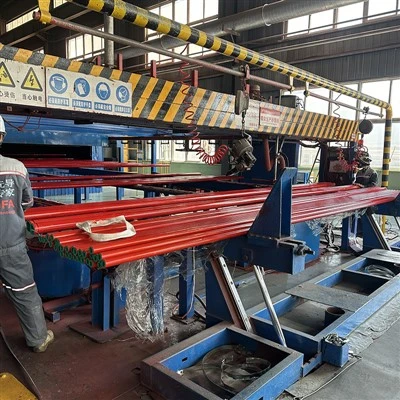
FBE coated carbon steel pipe refers to seamless or welded carbon / low‑alloy steel pipe protected by shop‑applied fusion bonded epoxy powder coating. Base carbon steel substrates can be manufactured as seamless, ERW/HFW, LSAW or SSAW steel pipe complying with API 5L, ASTM, EN or project‑specific line‑pipe specifications.
Important note: The FBE coating system defines only the anti‑corrosion layer. It does not determine base pipe grade, wall thickness, pressure rating or mechanical performance of carbon steel pipe itself, which shall be specified separately according to project operating conditions.
What Steel Pipe Can Be Used for FBE Coating?
FBE coating can be applied to different types of carbon steel pipe.

ERW / HFW Carbon Steel Pipe
ERW or HFW steel pipe is commonly used for many water, industrial, and pipeline applications.
The suitability of ERW/HFW pipe for FBE coating depends on the base pipe specification, surface condition, diameter, wall thickness, and project requirements.
Seamless Carbon Steel Pipe
Seamless pipe can be selected when the project requires seamless construction or specific pressure and mechanical performance.
Depending on the project, seamless carbon steel pipe may be supplied to standards such as ASTM or API specifications and subsequently coated with FBE.


SSAW Steel Pipe
SSAW FBE coated steel pipe can be considered for large-diameter water transmission, piling-related pipeline applications, slurry, and other large-scale projects where the spiral welded pipe construction meets the project requirements.
LSAW Steel Pipe
LSAW pipe can provide a practical combination of large diameter, controlled wall thickness, and project-specific line pipe grades. It is commonly considered for oil and gas transmission, water transmission, infrastructure, and industrial pipeline projects.

Core Manufacturing Process of FBE Coated Carbon Steel Pipe
Consistent FBE coating performance relies strictly on a qualified production process window: blast cleaning, preheating, electrostatic powder spraying, fusion bonding and controlled curing.
Surface Preparation
1
>
Pre‑Heating of Steel Pipe
2
>
Electrostatic FBE Powder Coating
3
>
Fusion and Curing
4
>
Cooling
5
>
Final Inspection
6
1.Surface Preparation (Blasting & Cleaning)
First, remove grease, oil, old marking residues and surface contaminants from carbon steel pipe. Then perform abrasive blasting to achieve cleanliness Sa 2½ near-white metal blast cleaning.A properly prepared steel surface provides the anchor profile required for the epoxy coating to achieve strong adhesion.
2.Pre‑Heating of Carbon Steel Pipe
After blasting, the steel pipe is heated to the qualified application temperature required by the selected FBE powder, matching the certified temperature range of selected FBE powder batch.
Temperature control is critical because insufficient or excessive heating can affect:Powder melting,Flow,Fusion,Cure
,Coating thickness,Adhesion,Final coating performance
3.Electrostatic FBE Powder Coating
Charged epoxy powder is electrostatically sprayed onto grounded hot carbon steel pipe. Powder melts upon hot steel contact, flows fully into the blasted anchor profile and forms a continuous unbroken film over pipe body, weld seams and geometric transitions.
4.Fusion and Curing
The epoxy powder melts, flows, gels, and chemically cross-links as it cures.
Unlike a simple thermoplastic coating, cured FBE is a thermoset coating. Once properly cured, it forms a hard, continuous protective layer bonded to the steel substrate.
5.Cooling
After coating and curing, the pipe is cooled under controlled conditions.
The coated pipe must be protected from damage during cooling, handling, inspection, and storage.
6.Final Inspection
Critical acceptance checks include dry‑film thickness DFT measurement, holiday (jeep) porosity testing, pipe‑end cutback verification, documented defect repairs with mandatory retesting, plus full traceability linking each pipe ID to coating lot and powder batch records.
|
|
|


There are four mainstream FBE system variants for carbon steel pipe
- Single‑layer external FBE coated carbon steel pipe: Standard primary corrosion barrier for well‑controlled installation environments
- Dual‑layer abrasion‑resistant FBE coated carbon steel pipe: Extra tough outer FBE layer for HDD, road crossings, river crossings and high‑scrape zones
- FBE as epoxy primer for 3LPE /3LPP coated carbon steel pipe: FBE serves as the corrosion base layer under adhesive and polyolefin outer layers in multi‑layer coating systems
- Internal FBE lining carbon steel pipe: Special‑qualified interior FBE lining for potable water, produced water or process media service; external buried FBE powder cannot be reused for internal lining automatically.

FBE Coated Pipe Inspection and Testing
The coating should have an acceptable continuous appearance, with no obvious defects as a prerequisite
Dry film thickness
DFT measurements verify coating thickness.
For FBE coated carbon steel pipe, DFT measurement is used to verify whether the cured coating meets the specified thickness requirements.
FBE pipe quotation should ideally clarify:Minimum coating thickness,Nominal coating thickness,Maximum permitted thickness, if specified,Measurement method,Gauge requirements,Inspection frequency,Acceptance criteria
DFT records can also form part of the coating inspection documentation supplied with the shipment.
Holiday testing
Holiday testing, also called jeep testing, is used to detect discontinuities in the coating.
A holiday is a small discontinuity, pinhole, void, or other defect that may expose the steel substrate.
If a defect is detected, the affected area can be repaired using an approved repair system. The repaired area should then be reinspected according to the project requirements.
Adhesion-related testing
Used when required by the applicable standard or project specification.
Cure-related testing
Used where required to verify that the epoxy system has been adequately cured.
Cutback inspection
Ensures that the uncoated pipe-end area meets the specified dimensions.
Repair inspection
Ensures repaired defects are properly restored and retested.
The exact tests and acceptance criteria should always be based on the applicable coating standard and project ITP.

FBE Coating Cutback and Pipe Ends
FBE coating is normally not applied all the way to the welding area at the pipe ends.
The uncoated section is called the cutback.
The purpose of the cutback is to provide sufficient space for:
- Field welding
- Weld inspection
- Field joint coating
- Pipeline installation
- End preparation
- Joint connection
It is important to confirm the required cutback before production because changing the cutback after coating may create additional processing and inspection requirements.
Key Performance Benefits of FBE Coated Carbon Steel Pipe
- Outstanding adhesion: Molecular mechanical interlock with properly prepared carbon‑steel surface, resisting lifting and disbondment under buried operating conditions
- Cathodic‑disbondment resistance: Well‑qualified FBE coating works synergistically with impressed‑current or sacrificial anode cathodic‑protection systems for buried and submerged carbon steel pipelines
- Chemical resistance: Resists attack from soil chemicals, groundwater brines and dissolved salts; performance depends on powder grade, operating temperature and actual service exposure
- Low VOC Coating Technology:FBE powder is a 100% solids coating system and does not rely on the solvent evaporation process used by many liquid paints.This is one reason FBE is widely considered for industrial corrosion protection.
- Fully inspectable coating: Dry‑film thickness DFT measurement, holiday (jeep) porosity testing and visual inspection deliver measurable quality evidence for project acceptance
- Suitable for Different Pipe Manufacturing Processes:FBE coating can be applied to suitable seamless, ERW/HFW, LSAW, and SSAW carbon steel pipes, allowing distributors to source different pipe types according to project requirements.

FBE Coated Carbon Steel Pipe Applications
- Oil and Gas Pipelines
- Water Transmission
- Municipal Pipeline Systems
- Chemical and Industrial Pipelines
- Mining and Slurry Pipelines
- Offshore and Submerged Applications
FAQ About FBE Coated Carbon Steel Pipe
Single-Layer FBE vs Dual-Layer FBE
Not every FBE coated carbon steel pipe uses the same coating system.
Single-Layer FBE
Single-layer FBE consists of one fusion bonded epoxy coating layer applied directly to the prepared steel.
It offers:
Strong adhesion
Corrosion resistance
Good compatibility with cathodic protection
Factory-controlled application
Relatively simple coating structure
Single-layer FBE is commonly considered for buried and submerged pipeline applications where the installation conditions are suitable.
Dual-Layer FBE
Dual-layer FBE uses two FBE-related layers, typically designed to provide additional protection against mechanical damage.
A dual-layer or abrasion-resistant FBE system may be considered where the pipe is exposed to greater installation risks, such as:
Rocky soil
Crossings
Difficult transportation
HDD installation
Heavy handling
Increased abrasion risk
The correct system should be selected according to the project installation method and mechanical exposure rather than simply choosing the thicker coating.
External FBE Coating vs Internal FBE Coating
FBE can be applied to the outside or inside of carbon steel pipe, but these are not interchangeable applications.
External FBE Coated Carbon Steel Pipe
External FBE coating protects the outside surface of the steel pipe from:
Soil moisture
Groundwater
Oxygen
Dissolved salts
External corrosive environments
It is widely associated with buried and submerged pipeline applications.
Internal FBE Coated Carbon Steel Pipe
Internal FBE coated steel pipe uses epoxy lining on the internal pipe surface.
Internal FBE may be considered where the transported medium can cause internal corrosion or where a smooth internal surface is beneficial.
Depending on the application, internally FBE coated pipe may be used for:
Water
Produced water
Oil
Gas-related services
Industrial fluids
Certain chemical services
However, an external FBE qualification should not automatically be assumed to qualify an internal FBE system for every service. The internal coating must be selected according to the fluid, temperature, pressure, chemical exposure, and applicable standard.
FBE vs Epoxy Paint: What Is the Difference?
Although both systems use epoxy chemistry, FBE coating and liquid epoxy paint are not the same application technology.
FBE is supplied as dry powder and applied to heated steel through a fusion process.
Liquid epoxy paint is normally applied as a liquid coating and cured chemically or through another specified mechanism.
FBE provides several advantages for factory pipe coating:
Controlled application environment
No conventional solvent evaporation
Strong steel adhesion
Consistent application process
Automated production capability
Easy integration with holiday testing and inspection
Liquid epoxy systems, however, can be useful for:
Field joints
Touch-up
Local repairs
Areas where factory powder application is impractical
Therefore, a pipeline project may use both FBE and liquid-applied epoxy systems in different locations.
What is the difference between FBE coating and FBE powder coating?
FBE coating stands for the final cured anti‑corrosion layer finished on carbon steel pipe. "FBE powder coating" points more to the raw epoxy powder material plus the electrostatic powder‑spray manufacturing workflow.
| Item | FBE powder coating | FBE coating |
| Form | Dry solid epoxy powder (raw paint) | Continuous solid film on steel pipe |
| Status | Uncured starting material | Fully cured finished protective layer |
| Key feature | Needs heat to melt & react | Chemically fused to steel; solvent‑free, high adhesion, anti‑corrosion |
People often use the two terms interchangeably. When you see "FBE‑coated carbon steel pipe", it always means the pipe was coated using FBE powder coating raw material to obtain the final FBE coating film.
Hot Tags: fusion bond epoxy coated pipe, China fusion bond epoxy coated pipe manufacturers, suppliers, factory, 202 galvanized pipe, 3 inch 40 galvanized steel pipe, 40mm galvanised steel tube, 7 inch galvanized pipe, Gi Pipe 40, pre galvanized tube
Previous
Fire Fighting PipeYou Might Also Like



Send Inquiry