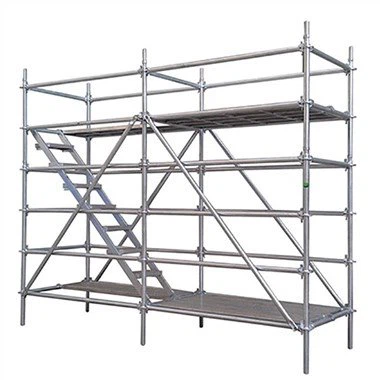
The origin of the scaffolding frame can be traced back to ancient times, a time when humans were driven by the need to build and reach greater heights. From the towering pyramids of Egypt to the colossal temples of ancient Greece, the use of support structures was crucial for construction projects that required elevation and access to elevated areas.
Ancient Origins
The earliest forms of scaffolding were rudimentary, consisting of simple ladders and platforms made from tree branches, ropes, and stone blocks. These basic structures provided a stable base for workers to stand on while they performed tasks such as building, repairing, and painting. In ancient Egypt, for example, the Egyptians used scaffolding made of wooden poles and rope to construct the pyramids. These scaffolds were designed to be sturdy enough to support the weight of workers and materials, allowing them to build the massive structures layer by layer.
Similarly, the ancient Greeks and Romans used scaffolding to construct their temples, amphitheaters, and other public buildings. These structures were often built using stone blocks that were too heavy to lift by hand, requiring the use of scaffolding to hoist the blocks into place. The Greeks and Romans also developed more advanced scaffolding techniques, such as the use of wooden frames and platforms that could be adjusted to different heights and angles.


Medieval and Renaissance Developments
During the Middle Ages and the Renaissance, the use of scaffolding continued to evolve. As construction techniques became more sophisticated, so did the design of scaffolding. In medieval Europe, for example, masons and carpenters developed a system of scaffolding known as "putlog" scaffolding. This system involved inserting wooden poles, known as "putlogs," into holes in the walls of a building. The putlogs were then used to support a platform made of wooden planks, providing a stable surface for workers to stand on.
In the Renaissance, architects and engineers began to experiment with new materials and designs for scaffolding. One of the most significant developments during this period was the use of iron and steel in scaffolding construction. Iron and steel were stronger and more durable than wood, allowing for the construction of taller and more complex scaffolds. This innovation opened the door to the construction of large-scale buildings and structures, such as cathedrals, palaces, and bridges.
Industrial Revolution and Modernization
The Industrial Revolution in the 18th and 19th centuries brought about significant changes in the construction industry and the design of scaffolding frames. With the advent of steam power and mechanization, construction projects became larger and more complex, requiring more advanced scaffolding systems. During this period, the first metal scaffolding systems were developed, consisting of prefabricated steel frames and components that could be easily assembled and disassembled on-site.
One of the key innovations in modern scaffolding design was the introduction of the frame scaffolding system. Frame scaffolding, also known as tubular scaffolding, consists of a series of vertical frames connected by horizontal ledger tubes. The frames are typically made of steel or aluminum and are designed to be lightweight, durable, and easy to assemble. Frame scaffolding systems provide a stable and reliable platform for workers to perform tasks at height, making them ideal for a wide range of construction projects, including building construction, renovation, and maintenance.
Present Day Frame Scaffolding
Today, frame scaffolding is one of the most widely used types of scaffolding in the construction industry. It is available in a variety of sizes and configurations to suit the specific needs of different projects. Frame scaffolding systems are designed to be modular, allowing for easy customization and adaptation to different job site conditions. They can be easily assembled and disassembled using simple tools, making them a cost-effective and efficient solution for temporary access and support.
As a scaffolding frame supplier, we offer a comprehensive range of Frame Scaffold Components to meet the diverse needs of our customers. Our products include main frames, horizontal braces, diagonal braces, and other accessories that are designed to work together to provide a safe and reliable scaffolding solution. Whether you are working on a small residential project or a large commercial development, we have the scaffolding products and expertise to help you get the job done.
In addition to Frame Scaffold Components, we also offer Main Frame Scaffolding and Frame Type Scaffolding systems that are designed to provide maximum flexibility and versatility. Our main frame scaffolding systems are available in a variety of sizes and configurations to suit the specific needs of different projects. They are easy to assemble and disassemble, making them a cost-effective and efficient solution for temporary access and support.
Our frame type scaffolding systems are designed to be used in a variety of applications, including building construction, renovation, and maintenance. They are available in a range of sizes and configurations to suit the specific needs of different projects. Our frame type scaffolding systems are easy to assemble and disassemble, making them a cost-effective and efficient solution for temporary access and support.
Contact Us for Your Scaffolding Needs
If you are in the market for high-quality scaffolding frames and components, look no further. With our extensive range of products and our commitment to providing excellent customer service, we are confident that we can meet your scaffolding needs. Whether you are a contractor, builder, or DIY enthusiast, we have the expertise and the products to help you complete your project safely and efficiently.
References
- Blockley, D. I. (1992). The Origins of Structural Safety: A Study of Building Failures in London, 1700–1860. Oxford University Press.
- O’Brien, W. J. (2003). The History of Scaffolding in the United States. Scaffolding Industry Association.
- Rowlands, G. (1981). Building in History. B. T. Batsford.