


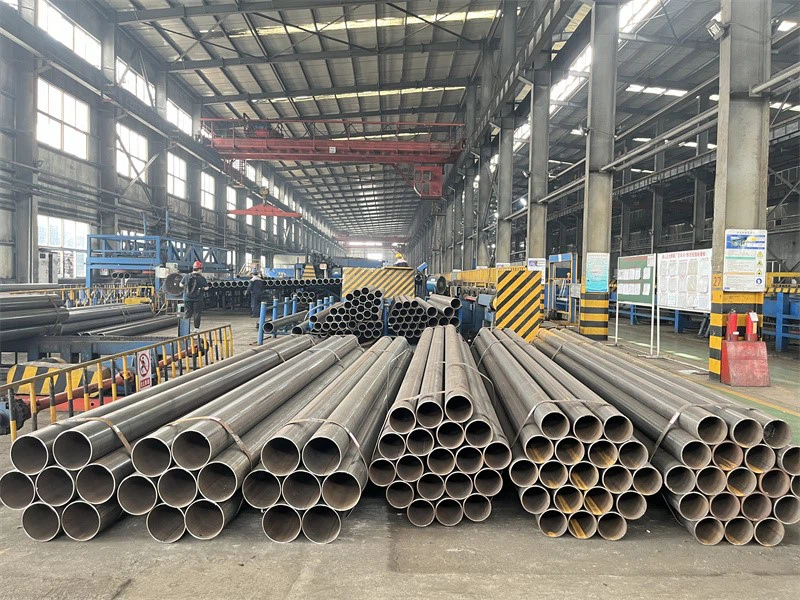
Furnace-welded pipe, also known as furnace butt-welded pipe, is a type of welded pipe that is created using a specialized welding process involving the use of a furnace. This method is primarily used for larger-diameter pipes, typically in the production of steel pipes for specific applications. Here are some key features and characteristics of furnace-welded pipes:
Manufacturing Process: Furnace-welded pipes are produced by heating the edges of steel plates or strips in a furnace until they reach a suitable welding temperature. Once the edges are sufficiently heated, they are pressed or rolled together to create a continuous longitudinal seam weld.
Seam Quality: The furnace-welded seam is typically characterized by its uniformity and consistency. The controlled heating and pressure in the furnace contribute to the high-quality seam formation.
Materials: Furnace-welded pipes are commonly made from carbon steel and low-alloy steel. These materials are often used for applications where strength and durability are paramount.
Large Diameter: This welding method is particularly suited for producing large-diameter pipes, such as those used in the construction of pipelines for the transportation of oil, gas, and other fluids.
Applications: Furnace-welded pipes are used in various heavy-duty and critical applications, including oil and gas pipelines, high-pressure fluid transport, and structural applications in the construction and infrastructure industries.
Quality Control: Furnace-welded pipes undergo stringent quality control measures and inspection processes to ensure the integrity of the weld and the overall pipe. Non-destructive testing (NDT) methods, such as ultrasonic testing, may be employed to detect any weld defects or irregularities.
Strength and Durability: Due to the nature of the furnace-welding process, these pipes are known for their strength and durability, making them suitable for applications where they are subjected to high-pressure and heavy loads.
Cost-Effective: Furnace-welded pipes are often considered cost-effective for large-diameter applications due to their efficiency in producing strong and reliable welds.
It's important to note that furnace-welded pipes are distinct from other welded pipe types, such as those produced using Electric Resistance Welding (ERW), Submerged Arc Welding (SAW), or High-Frequency Induction Welding (HFI). The choice of the welding method depends on factors such as the type of pipe, its diameter, material, and specific project requirements.


