


ASTM A53 is a standard specification for carbon steel pipe, covering both seamless and welded types, with black (uncoated) or hot-dipped galvanized finishes . It is intended for general applications, including conveying fluids like water, gas, steam,and air, as well as for use in mechanical and structural systems .
Grade B is the most commonly specified grade under this standard . It has a higher carbon content and strength compared to Grade A, making it suitable for industrial applications and higher-pressure systems .
What is the strength of ASTM A53 Grade B?
| Types and Grades | Min. Tensile Strength | Min. Yield Strength |
| Type E and S - Grade A | 330Mpa/48000psi | 205Mpa/30000psi |
| Type E and S- Grade B | 415Mpa/60000psi | 240Mpa/35000psi |
| Type F- Grade A | 330Mpa/48000psi | 205Mpa/30000psi |
What is the difference between ASTM A53 Grade A and Grade B?
- Choose Grade A if the primary need is for a pipe that is easy to form and weld for low-pressure or light structural applications, and cost is a significant concern .
- Choose Grade B for projects requiring higher strength, better pressure-holding capacity, and suitability for demanding environments like oil and gas transport or high-temperature systems. It is the standard for most industrial applications .
| Grade A | Grade B | |
| Tensile strength, min, psi [MPa] | 48 000 [330] | 60 000 [415] |
| Yield strength, min, psi [MPa] | 30 000 [205] | 35 000 [240] |
| Elongation in 2 in. or 50 mm | A,B | A,B |
| A The minimum elongation in 2 in. [50 mm] shall be that determined by the following equation:e= 625000 [1940] A02/U0.9 where: e = minimum elongation in 2 in. or 50 mm in percent, rounded to the nearest percent, A = the lesser of 0.75 in.2 [500 mm²] and the cross-sectional area of the tension test specimen, calculated using the specified outside diameter of the pipe, or the nominal width of the tension test specimen and the specified wall thickness of the pipe, with the calculated value rounded to the nearest 0.01 in.2 [1 mm2], and U = specified minimum tensile strength, psi [MPa]. |
||
According to the comparison results in the table above, the core difference between ASTM A53 Grade A and Grade B lies in their strength, which is a direct result of their chemical composition. Grade B is formulated to be stronger and is the more commonly used grade for industrial applications .
Can an A53 pipe be seamless?
Yes. ASTM A53 covers three types of pipe based on the manufacturing process.
- Type F, Furnace-Butt-Welded Pipe, Continuous Welded Pipe-Pipe produced in multiple lengths from coiled skelp and subsequently cut into individual lengths, having its longitudinal butt joint forge welded by the mechani cal pressure developed in rolling the hot-formed skelp through a set of round pass welding rolls.
- Type E, Electric-Resistance-Welded Pipe-Pipe pro duced in single lengths, or in multiple lengths from coiled skelp and subsequently cut into individual lengths, having a longitudinal butt joint wherein coalescence is produced by the heat obtained from resistance of the pipe to the flow of electric current in a circuit of which the pipe is a part, and by the application of pressure.
- Type S, Seamless Pipe-Pipe made without a welded seam. It is manufactured by hot working steel and, if necessary,by subsequently cold finishing the hot-worked tubular product to produce the desired shape, dimensions, and properties.
|
|
|
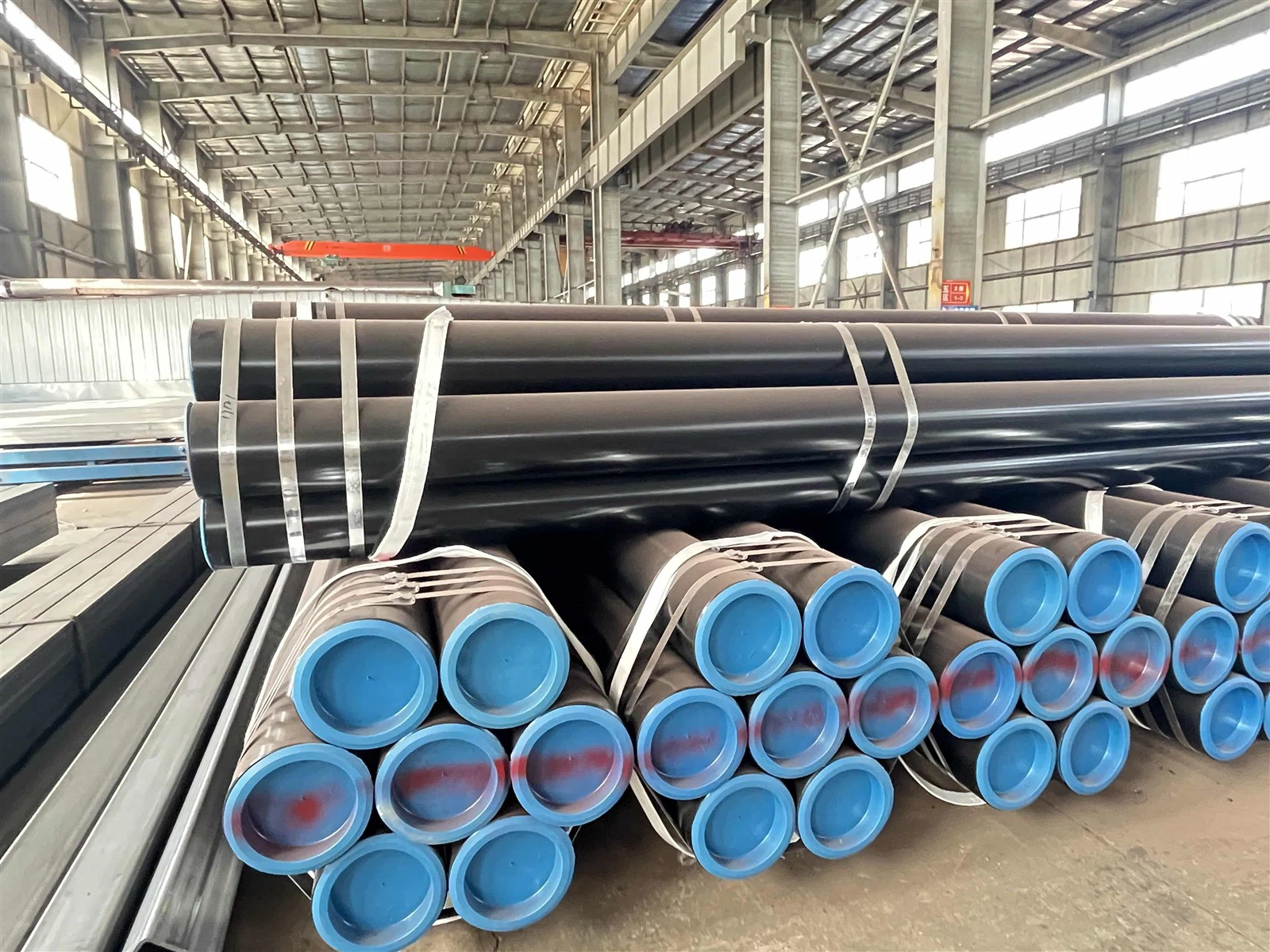
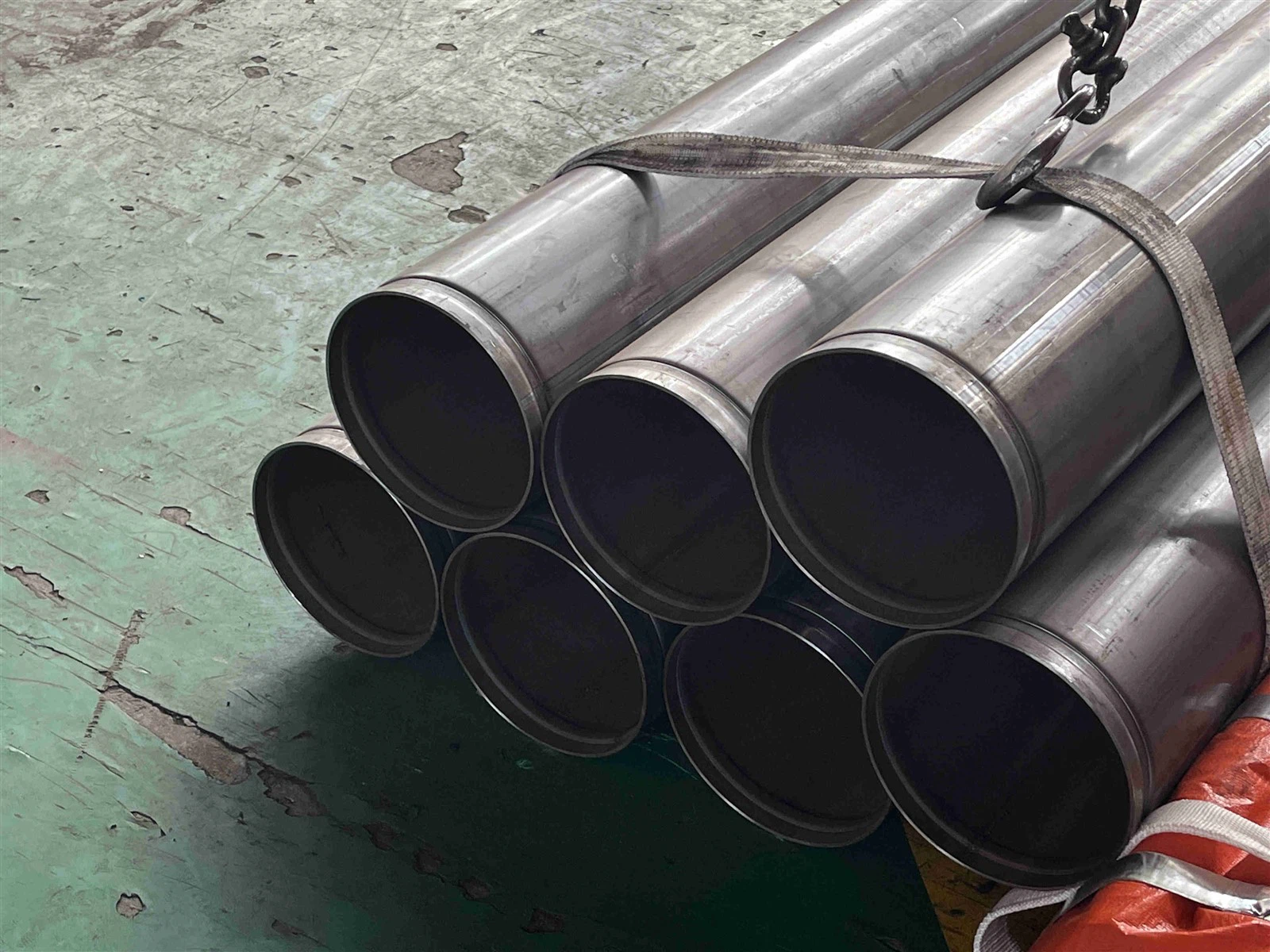
| ASTM A53 Seamless Pipe | ASTM A53 Electric-Resistance-Welded Pipe |
What size is ASTM A53 Grade B pipe?
| Sizes of Carbon Steel ASTM A53 Grade B Welded Pipe | ||||||||||||||||
| NB | Size | OD | 40S | 5S | 10S | S10 | S20 | S40 | S60 | XS/80S | S80 | S100 | S120 | S140 | S160 | XXS |
| mm | mm | mm | mm | mm | mm | mm | mm | mm | mm | mm | mm | mm | mm | mm | ||
| 1/8" | 10.29 | 1.2 | 1.73 | 2.41 | ||||||||||||
| 1/4" | 13.72 | 1.7 | 2.24 | 3.02 | ||||||||||||
| 3/8" | 17.15 | 1.7 | 2.31 | 3.2 | ||||||||||||
| 15 | 1/2" | 21.34 | 2.8 | 1.7 | 2.1 | 2.77 | 3.73 | 3.73 | 4.78 | 7.47 | ||||||
| 20 | 3/4" | 26.67 | 2.9 | 1.7 | 2.1 | 2.87 | 3.91 | 3.91 | 5.56 | 7.82 | ||||||
| 25 | 1" | 33.4 | 3.4 | 1.7 | 2.8 | 3.38 | 4.55 | 4.55 | 6.35 | 9.09 | ||||||
| 32 | 1 1/4" | 42.16 | 3.6 | 1.7 | 2.8 | 3.56 | 4.85 | 4.85 | 6.35 | 9.7 | ||||||
| 40 | 1 1/2" | 48.26 | 3.7 | 1.7 | 2.8 | 3.68 | 5.08 | 5.08 | 7.14 | 10.2 | ||||||
| 50 | 2" | 60.33 | 3.9 | 1.7 | 2.8 | 3.91 | 5.54 | 5.54 | 9.74 | 11.1 | ||||||
| 65 | 2 1/2" | 73.03 | 5.2 | 2.1 | 3.1 | 5.16 | 7.01 | 7.01 | 9.53 | 14 | ||||||
| 80 | 3" | 88.9 | 5.5 | 2.1 | 3.1 | 5.49 | 7.62 | 7.62 | 11.1 | 15.2 | ||||||
| 90 | 3 1/2" | 101.6 | 5.7 | 2.1 | 3.1 | 5.74 | 8.08 | 8.08 | ||||||||
| 100 | 4" | 114.3 | 6 | 2.1 | 3.1 | 6.02 | 8.56 | 8.56 | 11.1 | 13.5 | 17.1 | |||||
| 125 | 5" | 141.3 | 6.6 | 2.8 | 3.4 | 6.55 | 9.53 | 9.53 | 12.7 | 15.9 | 19.1 | |||||
| 150 | 6" | 168.3 | 7.1 | 2.8 | 3.4 | 7.11 | 10.97 | 11 | 14.3 | 18.3 | 22 | |||||
| 200 | 8" | 219.1 | 8.2 | 2.8 | 3.8 | 6.4 | 8.18 | 10.3 | 12.7 | 12.7 | 15.1 | 19.3 | 20.6 | 23 | 22.2 | |
| 250 | 10" | 273.1 | 9.3 | 3.4 | 4.2 | 6.4 | 9.27 | 12.7 | 12.7 | 15.1 | 19.3 | 21.4 | 25.4 | 28.6 | 25.4 | |
| 300 | 12" | 323.9 | 9.5 | 4 | 4.6 | 6.4 | 10.3 | 14.3 | 12.7 | 17.5 | 21.4 | 25.4 | 28.6 | 33.3 | 25.4 | |
| 350 | 14" | 355.6 | 9.5 | 4 | 4.8 | 6.4 | 7.9 | 11.1 | 15.1 | 12.7 | 19.1 | 23.8 | 27.8 | 31.8 | 35.7 | |
| 400 | 16" | 406.4 | 9.5 | 4.2 | 4.8 | 6.4 | 7.9 | 12.7 | 16.7 | 12.7 | 21.4 | 26.2 | 31 | 36.5 | 40.5 | |
| 450 | 18" | 457.2 | 9.5 | 4.2 | 4.8 | 6.4 | 7.9 | 14.3 | 19.1 | 12.7 | 23.8 | 29.4 | 34.9 | 39.7 | 45.2 | |
| 500 | 20" | 508 | 9.5 | 4.8 | 5.5 | 6.4 | 9.5 | 15.1 | 20.6 | 12.7 | 26.2 | 32.5 | 38.1 | 44.5 | 50 | |
| 550 | 22" | 558.8 | 9.5 | 4.8 | 5.5 | 6.4 | 9.5 | 22.2 | 12.7 | 28.6 | 34.9 | 41.3 | 47.6 | 54 | ||
| 600 | 24" | 609.6 | 9.5 | 5.5 | 6.4 | 6.4 | 9.5 | 17.5 | 24.6 | 12.7 | 31 | 38.9 | 46 | 52.4 | 59.5 | |
What is the coating for ASTM A53 pipe?
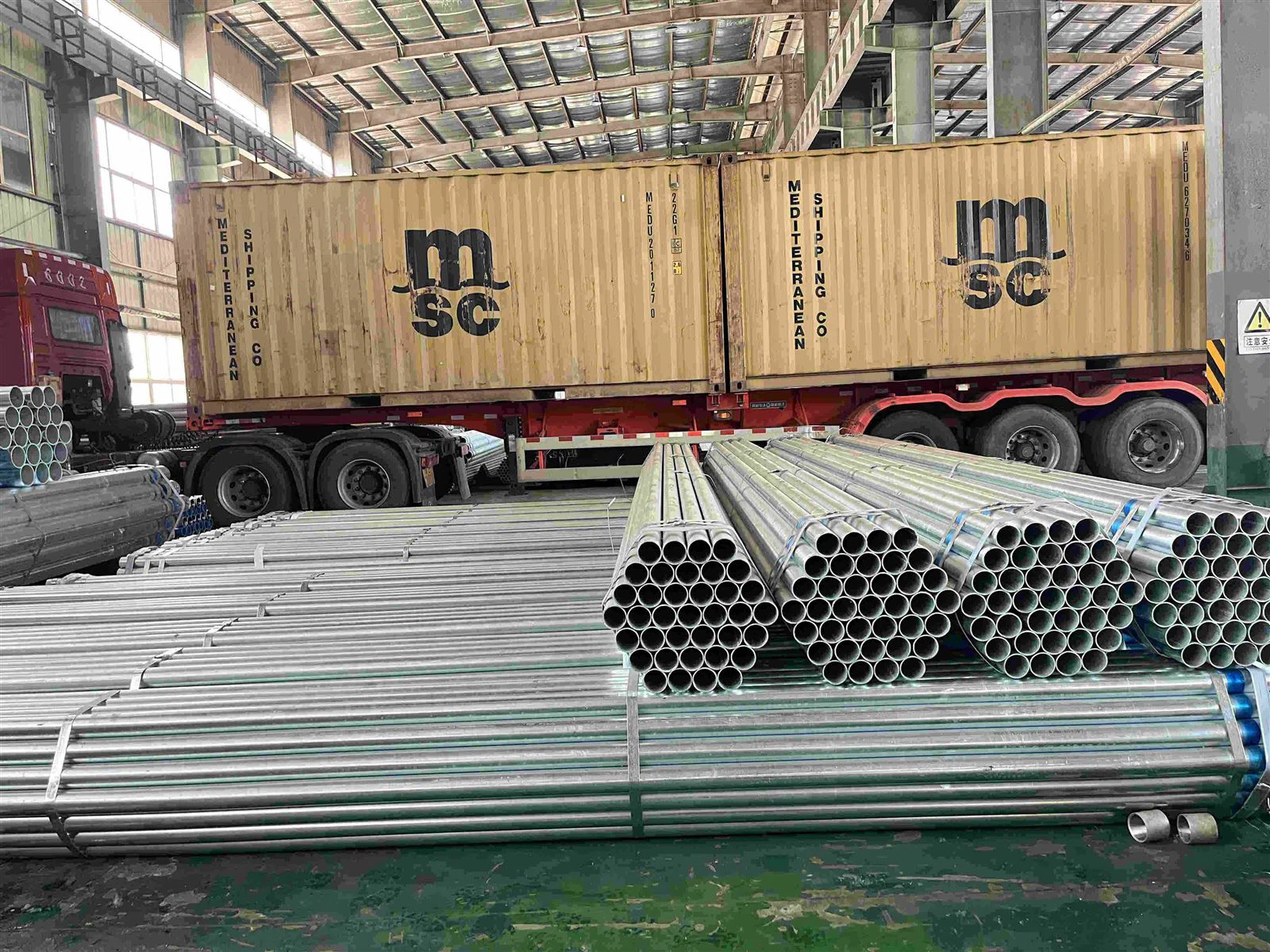
ASTM A53 pipe comes in two standard coatings:
- Black Pipe (uncoated / mill finish)
Bare carbon steel with natural mill scale
Used for indoor, non‑corrosive, or painted/insulated services
- Hot-Dipped Galvanized (HDG) coating
Zinc-coated for corrosion resistance
Used outdoors, underground, water, gas, plumbing
Other optional coatings (for special projects):
- Epoxy coating
- Fusion-bonded epoxy (FBE)
- 3-Layer Polyethylene (3LPE)
- Paint or custom anti-corrosion coatings
The ASTM A53 standard specifies two primary finishes for pipe: black and hot-dipped galvanized.For Very Harsh Conditions : A combination of a high-performance coating like FBE or 3LPE with a cathodic protection (CP) system is often recommended to extend the pipeline's service life dramatically .
What is ASTM A53 Grade B used for?
ASTM A53 Grade B pipes are suitable for various environments, from the framework of a building and the plumbing inside it, to the fire sprinkler system that protects it and the industrial equipment that powers it. Its versatility is its greatest asset.
- Fluid Transport: It is widely used for conveying water, gas, air, and steam in low to medium-pressure piping systems . This includes plumbing, heating systems, and water wells .
- Mechanical & Industrial Systems: Grade B is a common choice for industrial plants, including boilers, heat exchangers, and condensers . It's also used in power plants, oil refineries, and chemical plants .
- Structural Applications: Its strength and formability make it ideal for structural members like steel frameworks, building columns, poles, and scaffolding .
- Fire Protection: It is a standard material for fire sprinkler piping systems, often requiring additional certifications (UL/FM) .

FAQ
Youfa steel pipe is professional in hollow section pipe supplier of China. Welcome new and old customers inguiry us!
If you are selecting carbon steel pipes for your project, feel free to contact us with your required standard, size, and quantity for a quick quotation


