What is the surface hardness of 4 Inch Galvanized Pipe?
When it comes to 4 inch galvanized pipes, one of the crucial properties that often comes under scrutiny is their surface hardness. As a supplier of these pipes, I understand the significance of this characteristic in various applications. In this blog, we'll delve into the concept of surface hardness, what affects it in 4 inch galvanized pipes, and why it matters in real - world scenarios.
Understanding Surface Hardness
Surface hardness is a measure of a material's resistance to local deformation, such as indentation, scratching, or wear. It is an important property as it determines the pipe's ability to withstand mechanical stresses during handling, installation, and long - term use. For 4 inch galvanized pipes, which are widely used in construction, plumbing, and other industrial applications, surface hardness can impact their durability and performance.
The surface hardness of a galvanized pipe is influenced by two main components: the base steel pipe and the galvanized coating. The base steel usually consists of carbon steel, and its hardness is determined by factors like the carbon content, the manufacturing process (such as hot - rolling or cold - rolling), and heat treatment. Higher carbon content generally results in a harder steel, but it may also reduce ductility.
The galvanized coating, on the other hand, is a layer of zinc applied to the steel pipe to prevent corrosion. The coating's hardness is related to its thickness and the type of galvanizing process used. There are two common galvanizing methods: hot - dip galvanizing and electro - galvanizing. Hot - dip galvanizing involves dipping the steel pipe into a bath of molten zinc, creating a thick, strong coating. Electro - galvanizing, however, deposits a thin layer of zinc on the pipe through an electrochemical process. The hot - dip galvanized coating typically has better hardness and corrosion - resistance due to its greater thickness.
Measuring the Surface Hardness of 4 Inch Galvanized Pipes
There are several methods to measure the surface hardness of materials, and for galvanized pipes, two common techniques are used: the Brinell hardness test and the Rockwell hardness test.
The Brinell hardness test involves pressing a hard steel or carbide ball of a specified diameter into the surface of the pipe under a certain load for a fixed period. The diameter of the resulting indentation is measured, and the Brinell hardness number (BHN) is calculated. This test is suitable for measuring the hardness of relatively thick - walled pipes and provides an average hardness value over a larger area.
The Rockwell hardness test, on the other hand, uses a diamond cone or a hardened steel ball indenter. The indenter is first applied with a minor load, and then a major load is added. The difference in the depth of penetration between the minor and major loads is measured to determine the Rockwell hardness number (HR). This test is quicker and more suitable for measuring the hardness of thin - walled pipes or the galvanized coating itself.
The surface hardness values of 4 inch galvanized pipes can vary depending on the specific manufacturing process and the requirements of the application. Generally, the base steel of a 4 inch galvanized pipe may have a Brinell hardness in the range of 120 - 200 BHN, while the hot - dip galvanized coating can have a hardness that provides good protection against abrasion and corrosion during normal handling and use.
Importance of Surface Hardness in Applications
In construction projects, 4 inch galvanized pipes are often used as structural elements or for plumbing systems. A pipe with sufficient surface hardness can resist damage during the installation process, such as scratches or dents, which can compromise the pipe's integrity and lead to premature corrosion. For instance, when pipes are being transported to the construction site or maneuvered into place, hard - surfaced pipes are less likely to suffer from surface damage.
In plumbing applications, the surface hardness of the pipe helps resist the wear and tear caused by the flow of water and suspended particles. A harder surface is less prone to erosion, which can lead to leaks over time. Moreover, in industrial settings where the pipes may be exposed to harsh chemicals or abrasive substances, a high - hardness surface can extend the pipe's service life.
Let's also consider the use of these pipes in outdoor applications. Exposure to environmental factors like wind - borne sand, gravel, or other debris can cause surface damage to the pipes. A galvanized pipe with proper surface hardness can better withstand these erosive forces, preserving its protective coating and preventing corrosion from setting in.


Our Product Offerings and Hardness Assurance
As a supplier of 4 inch galvanized pipes, we take pride in offering high - quality products with consistent surface hardness. Our pipes are manufactured using advanced production techniques and strict quality control measures. The base steel undergoes rigorous testing to ensure it meets the specified hardness requirements.
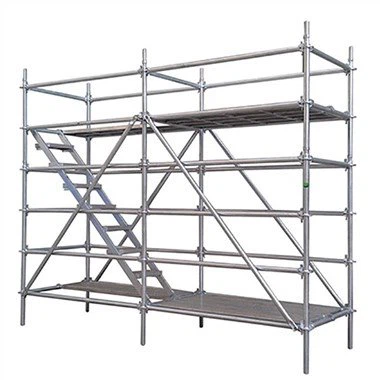
We mainly offer Galvanized Iron Round Pipe, Round Galvanized Steel Pipe and Building Pipe, all of which are hot - dip galvanized to provide a durable and hard - wearing coating. Our hot - dip galvanizing process ensures a thick and uniform zinc layer, which not only enhances the pipe's corrosion resistance but also contributes to its surface hardness.
To ensure the quality of our products, we conduct regular hardness testing using both Brinell and Rockwell methods. This allows us to provide customers with pipes that have the appropriate surface hardness for their intended applications. Whether it's for a small - scale plumbing project or a large - scale construction venture, our 4 inch galvanized pipes are designed to deliver reliable performance.
Contact for Procurement
If you're in the market for 4 inch galvanized pipes with optimal surface hardness, we're here to assist you. Our team of experts can help you select the right type of pipe based on your specific requirements, whether it's for construction, plumbing, or industrial use. We offer competitive pricing, high - quality products, and excellent customer service. Reach out to us today to start your procurement process and discuss how our 4 inch galvanized pipes can meet your needs.
References
-ASM Handbook Committee. "Hardness and Hardness Testing," ASM Handbook, Vol. 8, ASM International, 2000.
-Speight, James G. "The Chemistry and Technology of Ductile Iron," Gulf Publishing Company, 1999.
-Welding Handbook Committee. "Welding Handbook," Vol. 1, American Welding Society, 1978.