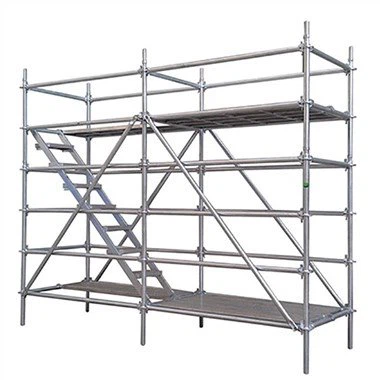
What is the maximum height a scaffolding steel prop can reach? Well, that's a question I get asked a lot as a scaffolding steel prop supplier. I'm here to break it down for you, so you have a clear understanding of what these bad boys can handle.
First off, let's talk about what scaffolding steel props are. These are essential components in the construction industry. They're used to provide support for structures, whether it's during building, renovating, or maintaining a building. They come in different types, like Telescopic Scaffold Pole, Telescopic Props Scaffolding, and Steel Acrow Props. Each type has its own features and is designed for specific applications.
Now, back to the main question: What's the max height? The maximum height a scaffolding steel prop can reach depends on several factors. One of the most important factors is the type of steel prop. Different types have different load - bearing capacities and height limitations.
Let's start with telescopic props. These are pretty popular because they're adjustable. You can extend them to your desired height within a certain range. But there's a catch. As you extend them further, their stability and load - bearing capacity change. The taller they get, the more vulnerable they become to lateral forces, like wind. A typical telescopic prop can usually reach a maximum height of around 5 - 6 meters. But this is under ideal conditions. That means a stable base, proper installation, and not exceeding the recommended load.
If you're using Steel Acrow Props, the height limit can vary. Acrow props are designed to be strong and reliable, but again, they have their limits. In general, they can reach up to 4 - 5 meters safely. However, this is also affected by the quality of the steel, the diameter of the prop, and how well it's maintained.
Another crucial factor is the load that the prop has to support. The more weight it has to bear, the lower the safe height will be. For example, if you're using a steel prop to support a heavy concrete slab during construction, you'll need to keep the height relatively low to ensure it doesn't collapse. On the other hand, if it's just providing temporary support for a light partition wall, you might be able to push the height a bit higher.
The ground conditions also play a big role. If the base of the prop is on soft or uneven ground, it can tilt or sink, which reduces its stability and lowers the maximum safe height. In such cases, you might need to use base plates or other stabilizing devices to distribute the load evenly and keep the prop upright.
Proper installation is non - negotiable. If the props aren't installed correctly, even if they're within the recommended height limit, they can fail. This includes making sure they're vertical, properly braced, and the tightening mechanisms are secure.
In some construction projects, engineers and structural designers will calculate the exact height and load requirements for each prop. They'll take into account all the factors I've mentioned above, as well as other project - specific details. This is especially important for large - scale construction where safety is of utmost importance.
It's also important to follow safety regulations. Different regions have different rules regarding the use of scaffolding steel props. For example, some require regular inspections, while others have strict height and load limits. Ignoring these regulations can not only lead to accidents but also result in legal issues.
Now, I know what you're thinking. So, how do I choose the right steel prop for my project? Well, it all comes down to your needs. First, determine the height you need to reach. Then, consider the load. If you're dealing with heavy loads, you might want to go for a thicker and stronger prop. And don't forget about the ground conditions. If they're not ideal, look for props that come with additional stabilizing features.
As a supplier, I've seen all sorts of projects, from small home renovations to large commercial buildings. And I always recommend my customers to err on the side of caution. It's better to choose a prop that can handle more than you think you'll need rather than pushing the limits and risking a collapse.
If you're in the middle of a project or planning one soon, and you're not sure which steel prop is right for you, don't hesitate to reach out. I can help you figure out the best solution based on your specific requirements. We've got a wide range of Telescopic Scaffold Pole, Telescopic Props Scaffolding, and Steel Acrow Props in stock, and we can offer you expert advice on installation and safety.
Contact me if you're interested in purchasing scaffolding steel props. I'm here to answer all your questions and help you make the right choice for your construction project.
References


- Construction safety manuals from relevant industry associations
- Engineering textbooks on structural support and scaffolding systems