Hey there! As a supplier of LSAW (Longitudinally Submerged Arc Welded) steel pipes, I often get asked about the differences between LSAW steel pipes and other types of steel pipes. So, I thought I'd write this blog to break it down for you in a simple and easy - to - understand way.
First off, let's talk about the manufacturing process. LSAW steel pipes are made by bending a steel plate longitudinally and then welding the seam using the submerged arc welding method. This creates a strong, straight - seam pipe. On the other hand, there are spiral welded pipes, like the Spiral Seam Welded Pipe. These pipes are made by continuously bending a steel strip into a spiral shape and welding the seams.
The manufacturing difference leads to some key variations in the properties of these pipes. LSAW pipes usually have better dimensional accuracy. Since the steel plate is bent and welded in a straight line, the diameter and wall thickness of LSAW pipes can be controlled more precisely. In contrast, spiral welded pipes may have slightly more variation in their dimensions due to the spiral forming process. This makes LSAW pipes a great choice when you need pipes with very specific size requirements, like in high - precision engineering projects.
Strength is another important factor. LSAW pipes generally have higher longitudinal strength. The straight - seam welding provides a more uniform stress distribution along the length of the pipe. Spiral welded pipes, however, have better hoop strength because of the spiral seam. The spiral shape of the seam helps the pipe resist internal pressure better in the circumferential direction. So, if you're dealing with a project that requires high longitudinal strength, such as a long - distance pipeline where the pipe needs to withstand pulling forces, LSAW pipes are your go - to. But if the main concern is internal pressure resistance, like in some water or gas storage tanks, spiral welded pipes might be more suitable.
Now, let's look at the surface quality. LSAW pipes usually have a smoother surface finish. The straight - seam welding process is less likely to cause surface irregularities compared to the spiral welding process. Spiral welded pipes may have some waviness or unevenness along the spiral seam. A smooth surface is important in applications where corrosion resistance is crucial. For example, in offshore oil and gas projects, a smooth - surfaced LSAW pipe can be more easily coated with anti - corrosion materials, which helps extend the pipe's service life.
Cost is always a consideration in any project. Generally, LSAW pipes are more expensive than spiral welded pipes. The manufacturing process of LSAW pipes involves more steps and requires higher - quality steel plates, which drives up the cost. Spiral welded pipes, with their continuous manufacturing process and the use of steel strips, are more cost - effective. However, you need to weigh the cost against the specific requirements of your project. Sometimes, the better quality and performance of LSAW pipes justify the higher price.
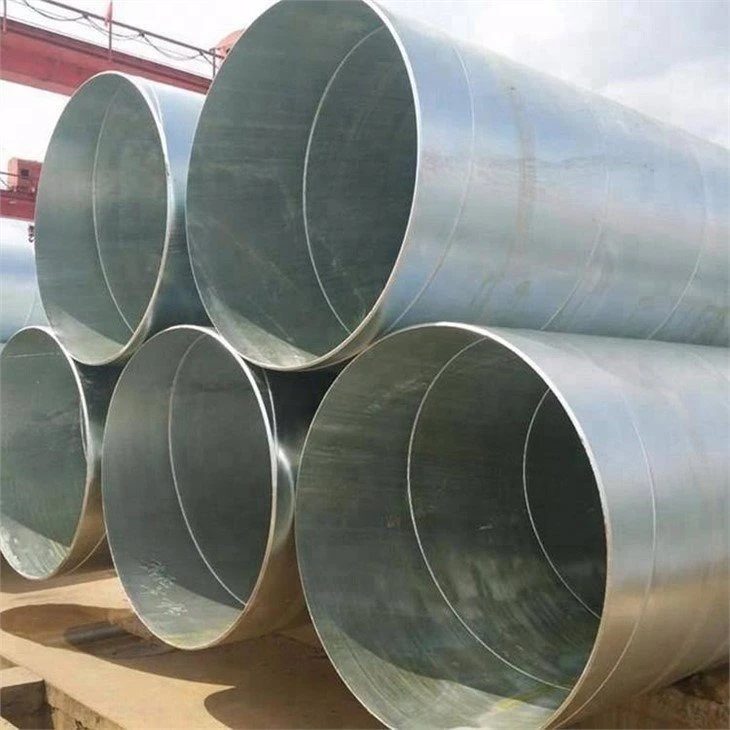
Another type of pipe we often compare LSAW pipes with is the Galvanized Spiral Steel Pipe. Galvanized pipes are coated with a layer of zinc to prevent corrosion. While both LSAW and galvanized spiral steel pipes can be used in corrosive environments, the coating on galvanized pipes adds an extra layer of protection. But again, LSAW pipes have the advantage of better dimensional accuracy and higher longitudinal strength.
LSAW pipes also have an edge when it comes to large - diameter pipes. It's easier to manufacture large - diameter LSAW pipes with high quality. The straight - seam welding process can handle larger steel plates more effectively. In contrast, making large - diameter spiral welded pipes can be more challenging in terms of maintaining the quality of the spiral seams. So, for large - scale infrastructure projects that require big - diameter pipes, like in some large - scale water supply systems or major oil and gas pipelines, LSAW pipes are often preferred.
The Lsaw Welded Pipe is also known for its good weldability. The submerged arc welding method used in LSAW pipe manufacturing creates a high - quality weld. This means that LSAW pipes can be easily welded to other components during installation. In projects where on - site welding is required, such as in building a complex pipeline network, the good weldability of LSAW pipes can save time and labor costs.
In terms of application scope, LSAW pipes are widely used in high - end industries. They are commonly found in the oil and gas industry for transporting crude oil, natural gas, and refined products. They are also used in the construction of large - scale bridges, high - rise buildings, and power plants. Spiral welded pipes, on the other hand, are more commonly used in general construction projects, such as water drainage systems, and in some less - demanding industrial applications.
When it comes to the length of the pipes, LSAW pipes can be produced in longer lengths. This is beneficial in projects where long, continuous pipes are needed, as it reduces the number of joints. Fewer joints mean less potential for leakage and lower installation costs. Spiral welded pipes can also be made in relatively long lengths, but the maximum length may be more limited compared to LSAW pipes.

In summary, the differences between LSAW steel pipes and other types of steel pipes come from their manufacturing processes, which then affect their properties, cost, and application scope. If you need pipes with high dimensional accuracy, high longitudinal strength, and a smooth surface finish, and you're willing to pay a bit more for quality, LSAW pipes are the way to go. But if cost - effectiveness, hoop strength, and corrosion protection are your main concerns, other types of pipes like spiral welded or galvanized pipes might be better choices.
If you're involved in a project and need to choose the right type of steel pipe, I'd be more than happy to help. Whether you're looking for detailed technical information or just want some advice on which pipe is best for your specific needs, feel free to reach out. We can have a good chat and figure out the most suitable solution for your project.
References:
- "Steel Pipe Handbook" - A comprehensive guide on different types of steel pipes and their properties.
- Industry reports on the manufacturing and application of LSAW and other steel pipes.