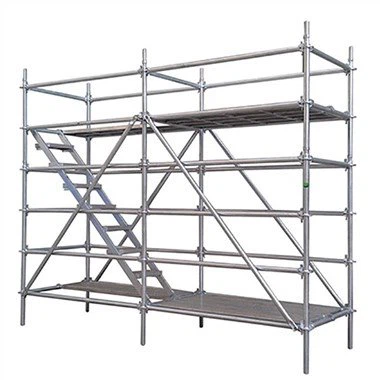
Hey there! As a supplier of Ringlock Scaffolding, I often get asked this question: "Is Ringlock Scaffolding resistant to corrosion?" Well, let's dive right into it and find out.


First off, let's understand what Ringlock Scaffolding is. Ringlock Scaffolding is a type of modular scaffolding system that's widely used in the construction industry. It's known for its high strength, easy assembly, and versatility. You can check out more about the Scaffolding Ringlock System on our website.
Now, corrosion is a big deal in the construction world. It can weaken the structure of scaffolding, making it unsafe to use. So, the resistance to corrosion of Ringlock Scaffolding is super important.
Factors Affecting Corrosion Resistance
There are several factors that determine whether Ringlock Scaffolding is resistant to corrosion.
Material Quality
The quality of the material used to make the scaffolding is crucial. Most Ringlock Scaffolding is made from steel. High - quality steel has better inherent corrosion resistance. For example, steel with a higher chromium content is more likely to form a passive oxide layer on its surface, which acts as a barrier against corrosion. At our company, we use top - grade steel for our Ringlock Standard to ensure better durability and corrosion resistance.
Surface Treatment
Surface treatment plays a huge role in protecting the scaffolding from corrosion. There are a few common methods:
- Galvanizing: This is one of the most popular methods. Galvanizing involves coating the steel with a layer of zinc. Zinc is more reactive than steel, so when exposed to the environment, the zinc corrodes first, protecting the underlying steel. It's like having a sacrificial layer. A well - galvanized Ringlock Scaffolding can last a long time even in harsh outdoor environments.
- Painting: Applying a high - quality paint can also provide a protective barrier. The paint acts as a shield, preventing moisture and oxygen from reaching the steel surface. However, the paint needs to be in good condition. If it gets scratched or chipped, the exposed steel can start to corrode.
Environmental Conditions
Where the Ringlock Scaffolding is used matters a lot. If it's used in a coastal area, the high salt content in the air can accelerate corrosion. Saltwater is highly corrosive, and it can break down the protective layers on the scaffolding more quickly. Similarly, in industrial areas with high levels of pollution, the presence of chemicals in the air can also cause corrosion. On the other hand, if the scaffolding is used in a dry, indoor environment, the risk of corrosion is much lower.
How to Ensure Corrosion Resistance
As a supplier, we take several steps to ensure that our Ringlock Scaffolding is resistant to corrosion.
Quality Control
We have strict quality control measures in place during the manufacturing process. We carefully select the raw materials and make sure that the surface treatment is done correctly. For example, when galvanizing, we ensure that the zinc coating has the right thickness and quality.
Regular Inspections
We also recommend regular inspections for our customers. They should check the scaffolding for any signs of corrosion, such as rust spots or flaking paint. If any issues are found, they can be addressed promptly. For example, if a small area of the paint has chipped, it can be repainted to prevent further corrosion.
Proper Storage
Proper storage is important too. When the scaffolding is not in use, it should be stored in a dry place. If possible, it should be covered to protect it from the elements. This can significantly extend its lifespan and maintain its corrosion resistance.
Real - World Examples
Let's look at some real - world examples to see how Ringlock Scaffolding performs in terms of corrosion resistance.
We had a customer who was working on a construction project in a coastal area. They used our Ringlock Scaffolding for several months. Thanks to the high - quality galvanizing, the scaffolding showed only minimal signs of corrosion at the end of the project. In contrast, another customer who used a lower - quality scaffolding in a similar environment had to replace parts of the scaffolding due to severe corrosion.
Benefits of Corrosion - Resistant Ringlock Scaffolding
There are many benefits to using corrosion - resistant Ringlock Scaffolding.
Safety
First and foremost, it's safer. Corroded scaffolding can lose its structural integrity, which can lead to accidents. By using a corrosion - resistant system, you can ensure the safety of the workers on the scaffolding.
Cost - Effectiveness
In the long run, it's more cost - effective. Although corrosion - resistant scaffolding may have a higher upfront cost, it lasts longer. You don't have to replace it as often, which saves money on replacement and maintenance.
Versatility
Corrosion - resistant Ringlock Scaffolding can be used in a variety of environments, from coastal areas to industrial sites. This makes it a great choice for different types of construction projects. You can learn more about Construction Scaffolding on our website.
Conclusion
So, is Ringlock Scaffolding resistant to corrosion? The answer is yes, but it depends on several factors such as material quality, surface treatment, and environmental conditions. As a supplier, we do our best to provide high - quality, corrosion - resistant Ringlock Scaffolding.
If you're in the market for Ringlock Scaffolding and want a reliable, corrosion - resistant solution, we'd love to talk to you. Whether you're working on a small residential project or a large commercial building, our Ringlock Scaffolding can meet your needs. Contact us today to discuss your requirements and get a quote. We're here to help you make the right choice for your construction project.
References
- "Corrosion of Metals in Construction" - A textbook on construction materials and their corrosion behavior.
- Industry reports on the performance of different types of scaffolding in various environments.