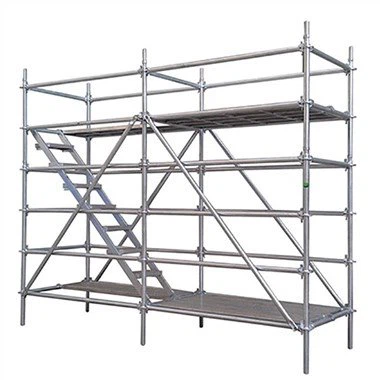
Hey there! As a supplier of Ringlock Scaffolding, I often get asked about how to install platforms on Ringlock Scaffolding. It's not as complicated as it might seem at first glance, and in this blog, I'm gonna walk you through the whole process step by step.
First things first, let's talk a bit about what Ringlock Scaffolding is. The Ringlock Scaffolding System is a type of modular scaffolding that's known for its high strength, easy assembly, and versatility. Its unique locking mechanism, with circular rosettes on the vertical standards, makes it super quick and secure to connect components. And that's one of the reasons why it's so popular in construction projects all over the world.
Pre - installation Checks
Before you start installing the platforms on your Ringlock Scaffolding, there are a few important checks you need to do. First, make sure the ground where the scaffolding will be set up is level, firm, and able to support the weight of the scaffold and the loads it will carry. Uneven ground can lead to instability and safety hazards.
Next, inspect all the scaffolding components. Check the Scaffolding Ledger And Standard for any signs of damage, like cracks, bends, or corrosion. Damaged parts should never be used in the installation as they can compromise the integrity of the entire structure.
Setting Up the Foundation
The foundation of your Ringlock Scaffolding is crucial. Start by placing the base jacks on a stable surface. The base jacks are used to level the scaffold and adjust its height. Make sure they are properly tightened and secured. Then, insert the vertical standards (uprights) into the base jacks.


The standards are the vertical components of the scaffolding, and they provide the main support. Connect the standards to each other using the rosettes on the vertical members. The Ringlock Scaffold System allows for quick and easy connection of these components. Just insert the ledger (horizontal member) into the appropriate hole in the rosette and use a hammer to lock it in place.
Installing the Ledgers
Once the standards are in place, it's time to install the ledgers. The ledgers run horizontally between the standards and provide support for the platforms. Measure the distance between the standards accurately to ensure that the ledgers are installed at the correct height.
For a more stable structure, it's recommended to install the ledgers at regular intervals. Usually, the first ledger is placed about 0.5 - 1 meter above the base, and subsequent ledgers are spaced at intervals of around 1.5 - 2 meters, depending on the project requirements.
Platform Installation
Now comes the main part: installing the platforms on the Ringlock Scaffolding. There are different types of platforms available for Ringlock Scaffolding, such as steel mesh platforms or wooden planks.
Steel Mesh Platforms
If you're using steel mesh platforms, start by positioning the platform on top of the ledgers. Make sure the platform is aligned properly and that its edges rest evenly on the ledgers. Some steel mesh platforms come with clamps or hooks that can be used to secure them to the ledgers. Use these fastening devices to attach the platform firmly to the ledger.
Check that the platform is level and doesn't wobble. If it does, you may need to adjust the height of the base jacks or the position of the ledgers. Also, ensure that there are no gaps between the platforms to prevent objects or people from falling through.
Wooden Planks
For wooden planks, the process is a bit different but still straightforward. First, select planks that are in good condition, without any splinters, cracks, or signs of rot. Place the planks on top of the ledgers, making sure they overlap each other by at least 200 - 300mm. This overlapping provides additional support and stability.
Use nails or screws to secure the wooden planks to the ledgers. Make sure the fasteners are driven in straight and tight. It's also a good idea to use a spirit level to check the levelness of the wooden planks.
Adding Guardrails
To ensure the safety of the workers on the platform, it's essential to install guardrails. Guardrails consist of a top rail, a mid - rail, and a toe board. The top rail should be installed at a height of around 1 - 1.2 meters above the platform level. The mid - rail is placed halfway between the top rail and the platform, and the toe board is installed along the edge of the platform to prevent small objects from falling off.
Attach the guardrail components to the standards using the Ringlock connection system. Just like with the ledgers, insert the guardrail bars into the appropriate holes in the rosettes and lock them in place. Make sure the guardrails are properly secured and can withstand the weight and impact of workers.
Checking for Stability
After the platforms and guardrails are installed, do a final check for stability. Walk around the scaffold and gently shake the platforms to see if there are any signs of movement or instability. Check all the connections, including the ones between the standards, ledgers, platforms, and guardrails. Make sure all the locks are fully engaged and the components are tightened.
If you notice any issues, such as loose connections or an unstable structure, take the time to fix them immediately. Safety should always be your top priority when working with scaffolding.
Maintenance and Safety
Once the platforms on your Ringlock Scaffolding are installed, it's important to maintain the structure. Regularly inspect the scaffolding for any signs of wear and tear, damage, or loose connections. Replace any damaged components as soon as possible.
Also, follow all the safety regulations and guidelines when using the scaffolding. Make sure workers are trained in how to use the scaffolding safely, and that they wear appropriate safety gear, such as hard hats, safety harnesses, and non - slip shoes.
Why Choose Our Ringlock Scaffolding?
As a supplier, we take pride in offering high - quality Ringlock Scaffolding. Our products are made from top - grade materials, ensuring durability and long - term performance. We have a wide range of components available, so you can easily customize your scaffolding to meet the specific needs of your project.
If you're interested in purchasing Ringlock Scaffolding for your next construction project, don't hesitate to get in touch with us. Our team of experts is ready to answer any questions you may have and help you with the selection and installation process. Whether you're a small contractor or a large construction firm, we can provide you with the right scaffolding solution at a competitive price.
Conclusion
Installing platforms on Ringlock Scaffolding is a process that requires careful planning, proper installation techniques, and regular maintenance. By following the steps outlined in this blog, you can ensure a safe and stable scaffolding structure for your construction project. If you have any further questions or need more information about our Ringlock Scaffolding System, feel free to contact us. We're here to help you make your construction project a success.
References
- General construction safety guidelines and standards.
- Manufacturer's manuals for Ringlock Scaffolding components.