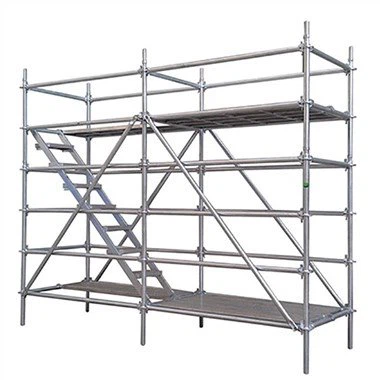
Hey there! As a scaffolding frame supplier, I'm stoked to share some essential tips on how to install a scaffolding frame safely. Whether you're a DIY enthusiast or a professional contractor, safety should always be your top priority when working with scaffolding. So, let's dive right in!
1. Planning and Preparation
Before you even start assembling the scaffolding frame, it's crucial to do some thorough planning. First off, assess the site where you'll be setting up the scaffolding. Make sure the ground is level, stable, and free from any debris or obstacles. Uneven ground can cause the scaffolding to become unstable, leading to potential accidents.
Next, check the weather forecast. Avoid installing scaffolding in adverse weather conditions such as high winds, heavy rain, or snow. These conditions can make the scaffolding slippery and increase the risk of falls.
You'll also need to gather all the necessary tools and equipment. This includes a hammer, wrench, plumb bob, and a level. Having the right tools on hand will make the installation process much smoother and safer.
2. Choosing the Right Scaffolding Frame
There are different types of scaffolding frames available in the market, and choosing the right one for your project is essential. For instance, if you're working on a small DIY project, a Frame Type Scaffolding might be a good option. It's easy to assemble and disassemble, making it perfect for short-term use.
On the other hand, if you're working on a large construction project that requires heavy-duty support, a Shoring Frame Scaffolding might be more suitable. It's designed to handle heavier loads and provide extra stability.


When selecting a scaffolding frame, make sure to consider the height and weight capacity requirements of your project. You don't want to end up with a frame that's too weak or too tall for the job.
3. Assembling the Scaffolding Frame
Once you've chosen the right scaffolding frame and gathered all the necessary tools, it's time to start assembling the frame. Begin by laying out the base frames on the ground. Make sure they are properly aligned and level. You can use a level to check the alignment and a plumb bob to ensure the frames are vertical.
Next, connect the base frames using the cross braces. The cross braces help to stabilize the frame and prevent it from swaying. Make sure the cross braces are securely fastened to the frames using the appropriate bolts and nuts.
After the base frames are assembled, start adding the vertical frames. Stack the vertical frames on top of the base frames and connect them using the ledger frames. The ledger frames provide horizontal support and help to distribute the weight evenly across the scaffolding.
As you assemble the scaffolding, make sure to follow the manufacturer's instructions carefully. Each scaffolding frame may have slightly different assembly requirements, so it's important to read the instructions thoroughly before you start.
4. Installing Guardrails and Toeboards
One of the most important safety features of a scaffolding frame is the guardrails and toeboards. Guardrails prevent workers from falling off the scaffolding, while toeboards prevent tools and materials from falling off the platform.
Install the guardrails along the perimeter of the scaffolding platform. Make sure the guardrails are at least 42 inches high and have a midrail installed at the halfway point. The midrail helps to prevent workers from slipping through the guardrails.
Toeboards should be installed along the edge of the platform to prevent tools and materials from falling off. Toeboards should be at least 4 inches high and securely fastened to the frames.
5. Inspecting the Scaffolding Frame
Once the scaffolding frame is assembled, it's important to conduct a thorough inspection before using it. Check for any loose bolts, nuts, or connections. Make sure the frames are properly aligned and level. Inspect the guardrails and toeboards to ensure they are securely installed.
You should also check the scaffolding for any signs of damage or wear. Look for cracks, bends, or other defects in the frames. If you notice any damage, do not use the scaffolding until it has been repaired or replaced.
6. Using the Scaffolding Frame Safely
Now that the scaffolding frame is installed and inspected, it's time to start using it. However, it's important to follow some safety guidelines to ensure your safety while working on the scaffolding.
First off, always wear appropriate safety gear, including a hard hat, safety glasses, and a harness. A harness can prevent you from falling off the scaffolding in case of an accident.
Secondly, do not overload the scaffolding. Make sure you know the weight capacity of the scaffolding and do not exceed it. Overloading the scaffolding can cause it to collapse, leading to serious injuries or even death.
Finally, be careful when moving around on the scaffolding. Avoid running, jumping, or making sudden movements. Use the ladders or stairways provided to access the different levels of the scaffolding.
7. Maintaining the Scaffolding Frame
Regular maintenance is essential to ensure the safety and longevity of your scaffolding frame. After each use, inspect the scaffolding for any signs of damage or wear. Clean the frames and remove any dirt, debris, or rust.
If you notice any damage or wear, repair or replace the affected parts immediately. Do not use the scaffolding if it is in a damaged or unsafe condition.
8. Disassembling the Scaffolding Frame
Once your project is complete, it's time to disassemble the scaffolding frame. Disassembling the scaffolding should be done in the reverse order of assembly. Start by removing the guardrails and toeboards, then the ledger frames, vertical frames, and finally the base frames.
Make sure to store the scaffolding components in a dry, secure place to prevent them from getting damaged or lost.
Conclusion
Installing a scaffolding frame safely requires careful planning, preparation, and attention to detail. By following the tips outlined in this blog post, you can ensure that your scaffolding is installed correctly and used safely.
If you're in the market for a high-quality scaffolding frame, look no further! As a leading Scaffolding H Frame Price supplier, we offer a wide range of scaffolding frames to meet your needs. Whether you're working on a small DIY project or a large construction project, we have the right scaffolding frame for you.
If you have any questions or would like to discuss your scaffolding needs, please don't hesitate to contact us. We're here to help you find the perfect scaffolding solution for your project.
References
- Occupational Safety and Health Administration (OSHA). (n.d.). Scaffolding safety. Retrieved from https://www.osha.gov/scaffolding
- National Institute for Occupational Safety and Health (NIOSH). (n.d.). Scaffolding safety. Retrieved from https://www.cdc.gov/niosh/topics/scaffolding/index.html