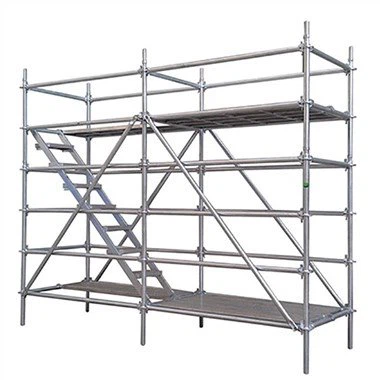
Ensuring the verticality of Ringlock Scaffolding is a critical aspect of construction safety and efficiency. As a leading supplier of Ringlock Scaffolding, I understand the importance of this factor and have extensive experience in guiding our clients through the process. In this blog, I will share some key strategies and best practices to ensure the verticality of Ringlock Scaffolding.
Understanding the Basics of Ringlock Scaffolding
Before delving into the methods of ensuring verticality, it is essential to understand the basic components of Ringlock Scaffolding. Ringlock Scaffolding is a modular system that consists of Ringlock Standard, ledgers, braces, and other accessories. The unique feature of Ringlock Scaffolding is its rosette-shaped connection, which allows for quick and secure assembly.
The verticality of the scaffolding depends on the proper installation of these components. Any misalignment or improper connection can lead to instability, which poses a significant risk to workers and the overall construction project.
Site Preparation
The first step in ensuring the verticality of Ringlock Scaffolding is proper site preparation. The ground where the scaffolding will be erected must be level, firm, and free of any debris or obstacles. A non - level surface can cause the scaffolding to tilt, leading to structural instability.
- Ground Inspection: Conduct a thorough inspection of the ground to identify any soft spots, slopes, or uneven areas. If the ground is soft, it may need to be compacted or reinforced with suitable materials such as concrete pads or timber sleepers.
- Marking the Layout: Use measuring tools such as tapes and levels to mark the exact layout of the scaffolding on the ground. This will help in ensuring that the vertical standards are placed in the correct positions.
Installation of Vertical Standards
The vertical standards are the primary load - bearing components of the Ringlock Scaffolding, and their proper installation is crucial for maintaining verticality.
- Use of Plumb Lines: When installing the vertical standards, use plumb lines to ensure that they are perfectly vertical. A plumb line is a simple yet effective tool that consists of a weighted string. By aligning the standard with the plumb line, you can ensure that it is straight up and down.
- Secure Foundation: The vertical standards must be firmly fixed to the foundation. This can be achieved by using adjustable base jacks. These jacks allow for fine - tuning of the height of the standards, ensuring that they are level and vertical. The base jacks should be tightened securely to prevent any movement.
Connection of Horizontal and Diagonal Braces
Horizontal and diagonal braces play a vital role in maintaining the stability and verticality of the Ringlock Scaffolding.
- Proper Placement: The horizontal ledgers and diagonal braces should be installed at the correct intervals as specified in the scaffolding design. The ledgers provide lateral support to the vertical standards, while the diagonal braces add additional stability by preventing the scaffolding from swaying.
- Secure Connections: Ensure that all the connections between the vertical standards, ledgers, and braces are tight and secure. The rosette connections of Ringlock Scaffolding are designed to provide a strong and reliable connection, but they must be properly engaged. Use a suitable hammer to ensure that the locking pins are fully inserted and locked.
Regular Inspections
Regular inspections are essential to ensure that the Ringlock Scaffolding remains vertical throughout its use.
- Daily Checks: Conduct daily inspections of the scaffolding to check for any signs of movement, damage, or loosening of connections. Look for any bent or damaged components and replace them immediately.
- Level Checks: Use levels to regularly check the verticality of the scaffolding. If any deviation is detected, take immediate corrective action. This may involve adjusting the base jacks or tightening the connections.
Training and Supervision
Proper training and supervision of the workers involved in the erection and use of the Ringlock Scaffolding are also crucial for ensuring verticality.
- Training Programs: Provide comprehensive training programs for the workers on the correct installation, use, and maintenance of the Ringlock Scaffolding. The training should cover topics such as site preparation, component installation, and safety procedures.
- Supervision: Have experienced supervisors on - site to oversee the erection and use of the scaffolding. The supervisors should be able to identify any potential issues and ensure that the workers follow the correct procedures.
Advanced Technologies for Ensuring Verticality
In addition to the traditional methods, there are also some advanced technologies that can be used to ensure the verticality of Ringlock Scaffolding.
- Laser Levels: Laser levels are highly accurate tools that can project a horizontal or vertical laser beam. By using a laser level, you can quickly and accurately check the verticality of multiple standards at the same time.
- Inclinometers: Inclinometers are devices that can measure the angle of inclination. They can be attached to the scaffolding to continuously monitor its verticality. If the inclination exceeds a certain limit, an alarm can be triggered, alerting the workers to take corrective action.
Importance of Verticality in Different Construction Scenarios
- High - Rise Construction: In high - rise construction projects, the verticality of the Ringlock Scaffolding is of utmost importance. A slight deviation in verticality can lead to significant lateral forces on the scaffolding, increasing the risk of collapse.
- Bridge Construction: For bridge construction, the scaffolding needs to be perfectly vertical to support the heavy loads and to ensure the accurate placement of construction materials.
Benefits of Ensuring Verticality
- Safety: Ensuring the verticality of Ringlock Scaffolding significantly enhances the safety of the workers on the construction site. A stable and vertical scaffolding reduces the risk of accidents such as falls and collapses.
- Efficiency: A vertically aligned scaffolding allows for easier movement of workers and materials, improving the overall efficiency of the construction process.
- Long - Term Durability: Proper verticality helps in distributing the loads evenly across the scaffolding components, reducing wear and tear and increasing the lifespan of the scaffolding.
Conclusion
Ensuring the verticality of Ringlock Scaffolding is a multi - faceted process that requires proper site preparation, correct installation of components, regular inspections, and the use of appropriate tools and technologies. As a Ringlock Scaffolding supplier, we are committed to providing high - quality products and comprehensive support to our clients.
If you are planning a construction project that requires Ringlock Scaffolding, we can offer you a wide range of Adjustable Scaffolding and Steel Scaffolding solutions. Our team of experts can guide you through the process of ensuring verticality and provide you with all the necessary training and support. Contact us today to discuss your specific requirements and start your project with confidence.


References
- Construction Industry Training Board (CITB). Scaffolding Training Manual.
- British Standards Institution. BS EN 12811 - 1:2003+A1:2009, Scaffolding - Performance requirements and general design.
- International Labour Organization. Safety in the Use of Scaffolds.