Hey there! As a supplier of Ringlock Scaffolding, I often get asked if this type of scaffolding can be used for historical building restoration. Well, let's dive right into it and find out.
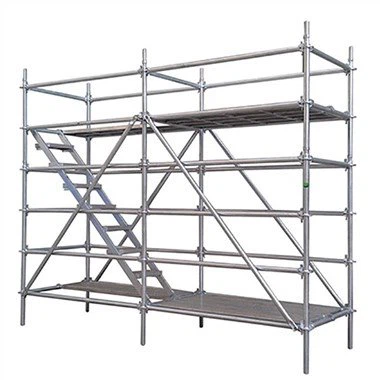
First off, what exactly is Ringlock Scaffolding? Ringlock scaffolding is a modular system that's known for its versatility and strength. It consists of vertical standards with pre - welded rings at regular intervals. Horizontal ledgers and diagonal braces can be easily connected to these rings using locking pins. This design makes it quick to assemble and disassemble, which is a huge plus in many construction and restoration projects.
Suitability for Historical Building Restoration
One of the key considerations when restoring a historical building is the preservation of its original structure and appearance. Historical buildings are often made of unique materials like old bricks, stones, and timbers. They also have intricate architectural details that need to be protected.
Ringlock scaffolding can be a great fit in many ways. For starters, its modular nature allows for precise customization. You can easily adjust the height, width, and shape of the scaffolding to fit the irregular contours of a historical building. This is super important because historical buildings rarely have the simple, straight - edged designs of modern structures. With Ringlock scaffolding, you can create a support system that hugs the building closely without causing unnecessary damage.
The adjustable nature of Ringlock scaffolding is also a major advantage. You can use Adjustable Scaffolding to fine - tune the platform levels. This is crucial when working on different parts of a historical building at various heights. Whether you're restoring a high - rise tower or a low - lying wing, you can set up the scaffolding to provide a stable and safe working surface.


Strength and Durability
Historical building restoration projects can take a long time, sometimes even years. So, you need a scaffolding system that can withstand the test of time and various weather conditions. Ringlock scaffolding is typically made of high - quality materials. Steel Scaffolding is a common choice, and it offers excellent strength and durability.
The Q235 steel used in Q235 Steel Ringlock Scaffolding System has good mechanical properties. It can support heavy loads, which is essential when you're transporting building materials and equipment up and down the scaffolding. Plus, steel is resistant to corrosion when properly treated, so it can last throughout the entire restoration project without significant degradation.
Minimizing Damage to the Building
Another critical aspect of historical building restoration is minimizing damage to the original structure. Ringlock scaffolding can be designed with soft, non - abrasive contact points. For example, you can use rubber pads or other protective materials at the points where the scaffolding touches the building. This helps prevent scratches, chips, and other forms of damage to the delicate surfaces of historical buildings.
The quick - assembly feature of Ringlock scaffolding also means less time spent on the building site. The shorter the construction period, the less chance there is of accidental damage to the historical building. Workers can set up the scaffolding efficiently and start the restoration work right away.
Challenges and Considerations
Of course, using Ringlock scaffolding for historical building restoration isn't without its challenges. One issue is the visual impact. Historical buildings are often landmarks in their communities, and the scaffolding needs to blend in as much as possible. You may need to use special paint or coverings to make the scaffolding less obtrusive.
Another consideration is the weight of the scaffolding. Some historical buildings may have weak foundations or structural elements that can't support a heavy load. In such cases, you'll need to do a detailed structural analysis and perhaps use additional support mechanisms to distribute the weight evenly.
Case Studies
Let's take a look at some real - world examples where Ringlock scaffolding has been used for historical building restoration. In a project to restore an old cathedral, the unique architecture with its domes and spires required a highly customizable scaffolding system. Ringlock scaffolding was chosen because it could be easily adjusted to fit the complex curves of the cathedral. Workers were able to access all parts of the building safely and efficiently, and the restoration was completed on time.
In another case, a historic mansion with a lot of detailed facades needed restoration. The scaffolding had to be set up in a way that didn't damage the delicate plasterwork. Ringlock scaffolding with protective contact points was used, and it provided a stable platform for the workers while keeping the building's original features intact.
Conclusion
So, can Ringlock scaffolding be used for historical building restoration? Absolutely! Its versatility, adjustability, strength, and ability to minimize damage make it a great choice for these types of projects. However, it's important to consider the specific requirements of each historical building and address any challenges that may arise.
If you're involved in a historical building restoration project and are looking for a reliable scaffolding solution, I'd love to have a chat with you. We can discuss your project in detail and figure out the best way to use Ringlock scaffolding to meet your needs. Feel free to reach out to me, and let's start the conversation about how we can make your restoration project a success.
References
- Construction Industry Research and Information Association. (2018). Scaffolding Best Practices for Heritage Buildings.
- Smith, J. (2020). Case Studies in Historical Building Restoration Using Modern Scaffolding Systems. Journal of Architectural Restoration.